by Max Fletcher for Points East magazine
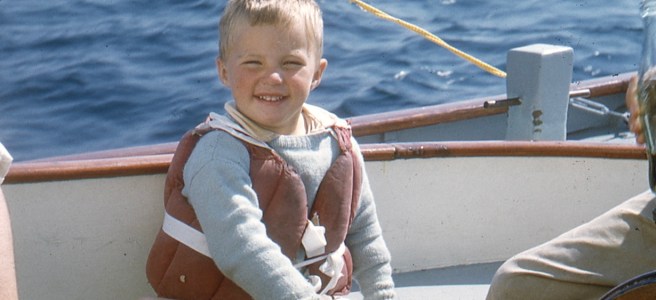
Growing up in a sailing family has been the defining influence of my life. My parents took me cruising before I was 2, and I was doing overnight races by age 9. As a kid, I sailed Turnabouts half the night, and by my early teens I was taking our family’s 38-foot sloop Majek out by myself. I continually pushed my limits, and from the freedom I was afforded n those early years was born the dream – and subsequent reality – to cross oceans one day.
My father put great trust in me, and that in turn gave me the confidence to develop my own skills. There is little room for error or mis-judgement on the ocean, and learning seamanship and navigation gave me practice in reasoning and decision-making that no classroom could ever teach.
When I was 14, I had to take Majek to Portsmouth, NH for a race. With my mother and younger sister Kris steering and looking out, we made the 12-hour trip in pea-soup fog with nothing but compasss and chart, eyes and ears. The fog plays tricks on one’s senses and stimulates the imagination, but I learned to keep my wits about me and not let fear affect my judgment.
In 1966 we began racing the Monhegan Race, and it soon became the biggest event each year – far more important than Christmas. To sail the race as perfectly as possible was one of the highest ideals in my life. Over the years we learned to recognize how wind patterns repeats themselves.
One of our favorite strategies was to sail high on starboard tack after rounding Cape Porpoise buoy (off Kennebunk) on the southwest breeze. In the middle of the night, when the wind shifted to the west as it always did, we would jibe onto a fast reach to the Monhegan Island whistler. One year we gained two hours on our competitors this way.
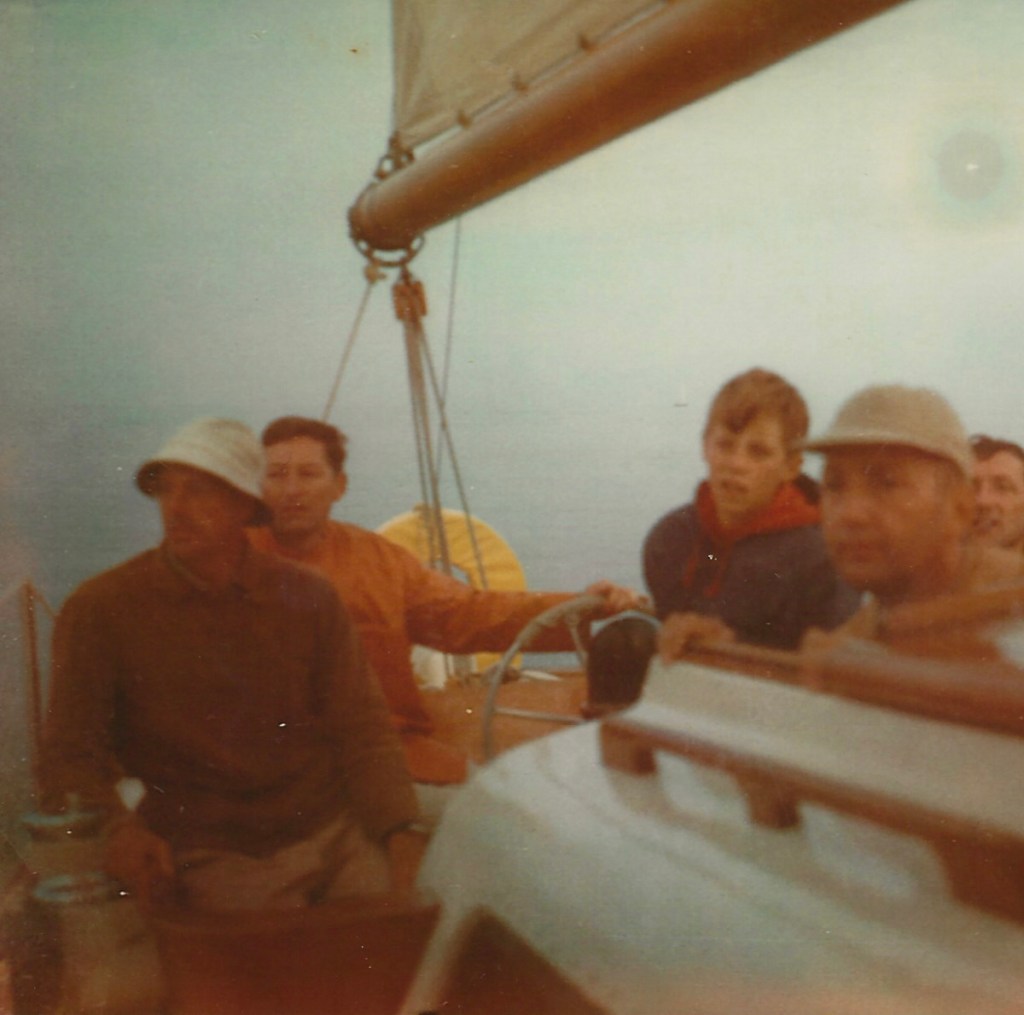
My Uncle Rod, Charlie Esty and others adult crews members became role models for an impressionable adolescent. To be a good shipmate was to become a better person. The qualities of thoughtfulness, mutual respect, competence, execution under pressure, and adaptability learned at seas were lessons to be taken ashore as well.
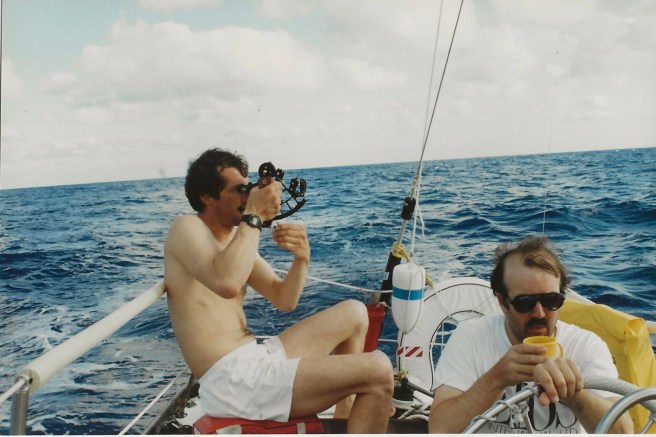
When I was in the 8th grade, Rod taught me celestial navigation, and three decades later (and long after his death) I put his lessons to use in the Marion-Bermuda Race, in which electronic navigation is not allowed.
In almost 40 years of sailing with my father, I’ve never once heard him yell or raise his voice. His reputation for getting in and out of Hussey Sound in light wind and foul current became legendary, and I was always amazed by his intuitive ability to make correct judgments about the wind.
Befitting one who grew up sailing gaff-riggers in the old days of sail, he loves to carry canvas. In the 1993 Marion-Bermuda Race, my sister Judy and I were on watch, doing 9 knots with Majek surfing on the edge of control. We were preparing to put a third reef in the mainsail when Abbot appeared on deck, looked around, and asked, “Hadn’t we ought to get some more canvas on her?”
Our family became much closer due to all the adventures together on Majek. On a sailboat, especially when racing, cooperation and teamwork are vital. My sisters and I took a lot of pride in our sail handling and in working together to make correct tactical choices, and in the hundreds of races we’ve done together have amassed a lifetime of memories.
I kept my childhood dreams alive and was able to make several major voyages as I grew older. I took a year off from Yale and with two friends sailed a 35-foot sloop to the Caribbean and spent nine months visiting virtually every island in the Windwards and Leewards. That was in 1976, when the Caribbean was still relatively undiscovered.
In 1982, I left Maine with my 9-month-old son and his mother and spent two years cruising across the Pacific to New Zealand on a 32-foot cutter.

I returned to Maine via Cape Horn, enduring fierce Southern Ocean gales and a capsize en route. In 1991, my father and I sailed with Newbold Smith to the ice-strewn waters of Greenland and Baffin Island.
In all these adventures and those that will certainly come in the future, the childhood I spent in the fog, current, and rock islets of the Coast of Maine will always stand me in good stead.
The ocean is an ideal environment for learning discipline, independence, responsibility, self-sufficiency, and respect for other people and for the environment.
More than anything I know, it also leads one to broaden his or her horizons.
My son Christopher started doing the Bermuda Race with us when he was 13, standing full watches, and is now a regular crew member aboard Majek. And so the cycle continues.
 Sailing Stories - Max Fletcher