
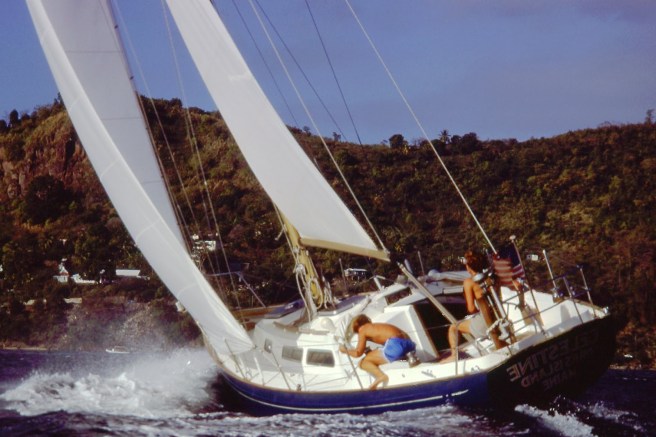
During the winter of 1976-77 two of my best friends – John and Peter Arndt – and I took a year off from college and sailed to the Caribbean, which was then still very much undiscovered. Their uncle Tom Arndt had made his Nicholson 35 “Celestine” available to us on very reasonable terms. We left Connecticut in October, sailed down the coast to North Carolina, then offshore to the Virgin Islands. This was my first time navigating offshore, which I did using a plastic Davis sextant. We island-hopped the Leeward and Windward Island chain, visiting virtually every island down to Trinidad where we celebrated “Carnival.” We sailed along the coast of Venezuela and out to the remote and deserted Los Roques Islands, across to Puerto Rico, through the Bahamas, and returned to Connecticut the following May. The trip proved to be an important proving ground and stepping stone for my future cruises.
We had blustery October weather from Connecticut to North Carolina. Jon Knowles joined us for the offshore passage to the Virgin Islands, during which I began keeping the following journal. Though some of the reflections are of a personal nature, written when I was an idealistic 20-year-old, I have left them unedited. That person’s youthful wisdom should not be edited out by his elder self.
Tuesday, November 2, 1976
330 miles off Cape Hatteras
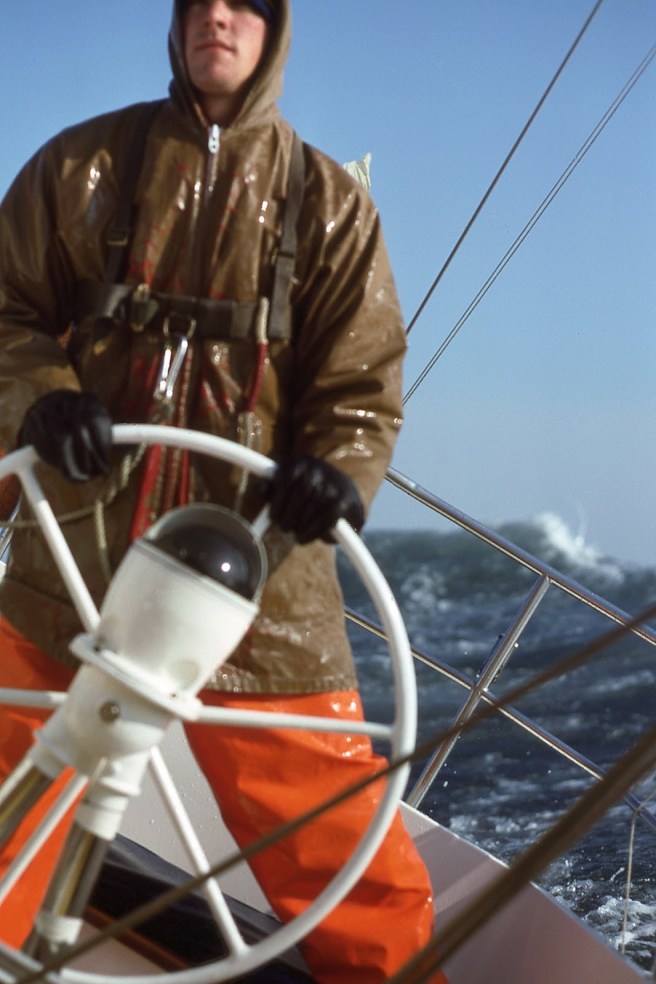
We’ve had quite a ride so far. We left Wilmington, NC Sunday at 6 PM and by midnight were down to a working jib and reefed main, surfing down incredible swells averaging 7.5-8.5 knots. We went over 9 knots numerous times and hit 10 a few times. In fact, John pinned it at 10 while surfing down a big swell. That first night I really began to wonder what we had gotten ourselves into! We hadn’t even hit the Gulf Stream yet, and already the waves were towering above the stern, crashing and foaming around the transom as the stern would lift, the bow would go down, down and we would surge down the wave for several seconds. I have never seen such a huge bow wave, it spread out all around, and on the really big swells the windward bow wave would get blown back, a stream of warm salty water in your face.
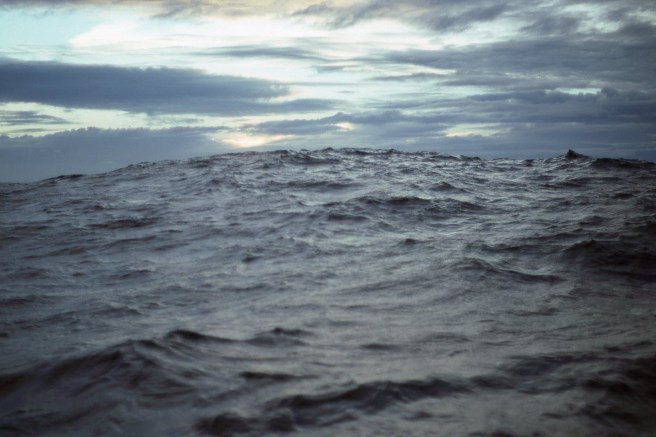
I was a bit concerned because we were making such good time that we would reach the Gulf Stream before daybreak, and it didn’t help my thoughts any when the bright moon went down about 2 AM! But we kept going, and probably did hit the Gulf Stream around 3 AM, and fortunately it was not bad at all. Nothing like the Bermuda Race 2 years ago, even though we had a strong NW wind blowing into it. The wind held throughout Monday, and both our sum log and our DR plot showed us making 170-175 miles the first 24 hours! A pretty good day’s run.
The 25-30 knot wind held through Monday night, Tuesday morning, and did not begin to weaken until Tuesday noon, about 4 hours ago. So Pete and I shook out the reef in the main and put up the #2 genoa, which we have up now and are logging 6-7 knots.
After we left Sunday we steered 120 degrees (rhumb line is 125) but we passed about 3 miles to leeward of a buoy when we were planning to pass close to windward of, so we altered course to 110. The swells must have really been taking us to leeward. The sky has been mostly cloudy the whole time, though the sun did peek through around 12:30 this afternoon so I grabbed the sextant and took a sight, which showed us being 70 miles north of the rhumb line. I had expected to be to the north, though not quite by that much. The Gulf Stream must have carried us 30 miles northeastward, and steering 110 instead of 125 must have brought us the rest of the way to windward. In any case, we altered course down to 135-140, which should take us out to the point where we want to turn and head south for St Thomas. It is good we are north of the rhumb line, because if we get off to the south too much we may get down into the horse latitudes too early, run out of wind, and end up having to power down to the trades and beat up to St Thomas. At least there is no risk of that now.
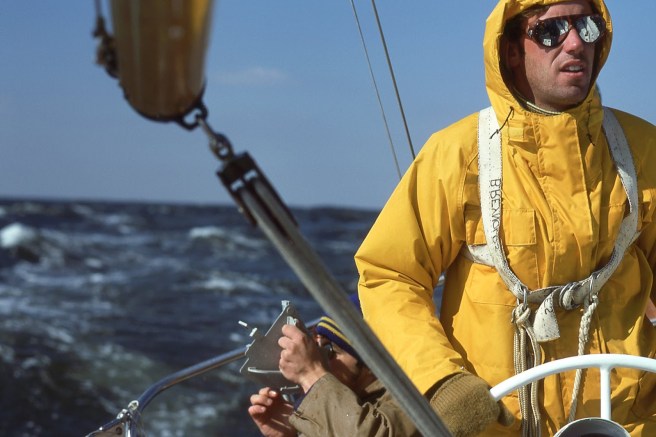
All of us felt the motions yesterday, though poor Pete is the only one who actually got sick. Today is the first day we have started to eat much, and I am planning to cook a green-bean casserole for dinner. All of us getting plenty of sleep.
It is so beautiful out here! Ever since passing the Gulf Stream the water has been deep blue, and very warm. In the swells Sunday night, we filled the cockpit about 1-1.5 feet deep several times, and you could feel your feet warming up inside your boots. It is good though that we put styrofoam in the cockpit, and the storm hatch is good. Last night a steamer crossed our bow, and another one this morning. We tried to raise them on the radio to ask for our exact position, but they did not answer.
We are dying to know how the election is coming out, but no such luck! I guess we won’t know for another week.
Thursday afternoon
We entered the horse latitudes a few hours ago. We had a good breeze which faded, faded, and died as we beat southward. So now are powering at 5 knots on a course of 160, which is the rhumb line to St Thomas.
We’ve had an interesting time since Tuesday. Tuesday night the wind piped back up to get us back up over 7 knots, but it came more from the east, so we had to strap in tight but could still only point up to around 160 (we wanted to steer 135). This wind continued throughout Wednesday, so we began to fear that we would get blown too far south again. I worked out our DR plot at 6 PM, using Tuesday’s sun sight as our last assumed position. This worked out to put us at 31* 15’N, 070*20’ W. I had no idea how accurate this was, for all I knew we could have been 100 miles from there (the sky had been cloudy all day so no chance of a sight). But two hours later a ship came by, so we called him up (the SS “Phinoa” or something) and he told us our position was 31* 10’N, 070* 02W. That meant our DR plot was just about perfect, which was quite reassuring and gave me a lot of confidence in the navigating.
But that did mean that we were right on the fringes of the horse latitudes, and we were not as far east as we wanted to be. So it was much to our fortune when a northerly wind came in late Wednesday night, and we were able to steer true east. It was a bit hairy though as the sky became very dark with black clouds covering the sky, and lightning on the horizon. The wind became very gusty but never got much above 25—30 fortunately.
That northerly finally came around to the east early this morning (Thursday) and forced us south into the horse latitudes. We are not quite as far east as we would like, but are not in bad shape either. Powering south now with little wind.
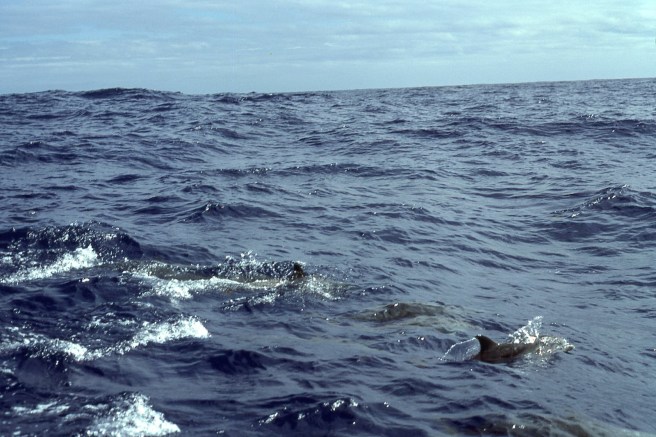
Today the sun has finally broken through and we now have the boat covered with wet clothes drying in the sun. An enormous school of dolphin (probably 50 or more) came by the boat for about 15 minutes awhile ago, darting under the bow and all around, so that was pretty exciting for awhile.

As of 9 AM this morning we are 720 miles from St Thomas, and heading straight for it (allowing for the current of course).
Bright and sunny today so we all took much-needed salt water baths. We got out both of my sextants today and I gave everyone a lesson in celestial navigation.
Friday evening
A beautiful southwest breeze sprang up at midnight last night and has been pushing us along at 5 knots all day (#1 Genoa up now). No need to power now.
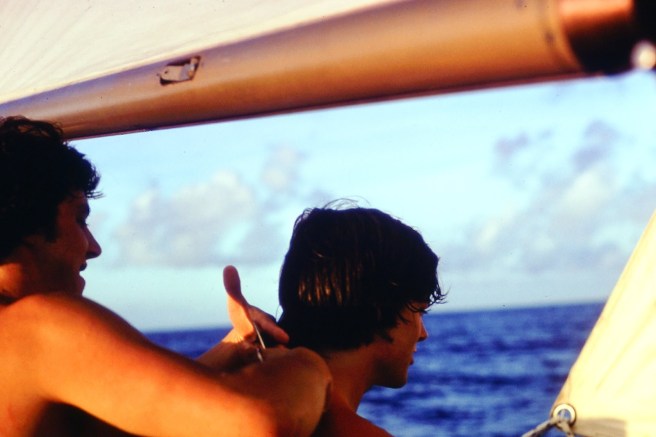
Today has been gorgeous. Crystal sky, bright sun. We all dragged in the water from the spinnaker halyard for hours on end and wore shorts all day. We must have used up half a bottle of Coppertone. Also, I gave John and Pete a haircut (not a bad job for a rookie) and John gave me one. We all shaved for the first time in 2 ½ weeks.
We’ve been dragging a fish line the whole trip and after 2 lost lures and one hopelessly tangled line, we finally got our first bite: a 2 ½ foot long eel-like thing, ugly as sin with quite a set of teeth. Also, a 5-inch-long flying fish landed on deck, and we passed 4 whales sunning themselves. Only about 25-30 feet long but fun to watch.
I took a sun sight today which came out exactly matching our DR plot. I’m really surprised (and relieved) how completely and easily we have been able to keep track of our position so far.
A few days ago we all bet a round of drinks on who is closest in predicting the sighting of land. The range was surprising: Pete said Wednesday, 2:30 AM; Jon said Thursday, 9 AM; I said Thursday, 10:30 AM; John said Saturday, 12:00 noon. It looks like Jon or I will be closest.
Sunday
Motoring Friday night and Saturday night was interrupted Saturday afternoon by a 15-20 knot easterly which came and went in 8 hours. For awhile though we were flying again, in the 7 ½ knot range.
This morning an easterly sprang up and has lasted all day, so we are praying this means we are in the trade winds. The northern limit of the trade winds is always changing, so we won’t know for sure for a day or so.
We called up a passing ship for a position check last night and once again our DR plot had been very close. By the way we have also asked these two ships for any reports of tropical weather disturbances, but there are no disturbances.
Yesterday we caught a big yellow fish with blue dorsal fin, but we were going 7+ knots and it’s jaw ripped out before we got him aboard. But this morning just as we were wondering what to eat for breakfast a beautiful roughly 7 pound fish took our line and within an hour we were eating delicious steaks, all we could eat and then some.

Today was again clear and brightly sunny so we all spent the whole day lounging like bums in the sun. We are now in the same latitude as southern Florida.
Wednesday morning
Those were the trade winds that sprang up Sunday morning, but they did not get very strong until yesterday. Generally we have been lounging in the sun all day, playing “Oh Hell” in the cockpit betting on everything we can think of, like choice of watch hours, cooking, etc. Now and then our games will be interrupted by a brief rain squall, which we often stay out in to get a shower. Ever since entering the horse latitudes we’ve been standing one-man watches, so now we all can get plenty of sleep at night and all stay up during the day. We stand our night watches in shorts and maybe a T-shirt now it’s so hot.
Right now we are 95 miles from St Thomas. We plan to go until we sight land (probably late this evening) then heave-to for the night and enter in daylight. I took 3 sun sights yesterday at 8 AM, 11 AM, and 1 PM. I advanced the 2 earlier ones according to our dead reckoning course and speed, so in effect they were all taken at the same time, and the 3 lines made a triangle that was 3 miles by 2 miles, so we were pretty sure on that one! That put us 200 miles away exactly.
This morning we picked up several Caribbean radio stations so will navigate by them as we get closer.
It is a little sad to see our ocean passage end, as I am now so used to having plenty of water around, getting only 3-4 hours sleep at a time, being so used to our little home here on the water. It will be hard to get used to having to watch out for reefs, anchoring, going through customs, and all. But we are all pretty excited and nonetheless anxious to see land once again.
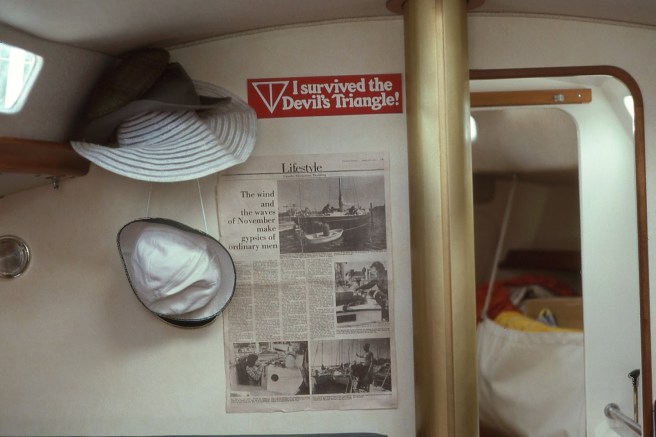
I wouldn’t have dared to breathe this before, but at Morehead City we picked up a bumper sticker that reads “I survived the Devil’s Triangle.” Today we feel safe enough so we got it out and taped it up inside the cabin.
Wednesday night, 10 PM
Land ho! I took 5 sun sights at various times today, advanced them all to 2:30 PM, and they formed a triangle about 9 miles by 4 miles, and showed us about 30 miles north of Anegada. And sure enough, at 4:05 PM Pete was steering when what we believe to be Anegada loomed up off to port (Later edit: this would have been high Virgin Gorda, not low lying Anegada). We kept going until 7:15 PM by which time more islands showed up ahead, which we believe are Tortola and St Thomas. But we’ve been having a hard time getting a good radio fix (there aren’t many good stations around) and we haven’t picked up any navigational lights (of which there aren’t many) so we’re hove-to right now and anxiously awaiting daylight to make our way in.
John spent an hour or so describing Einstein’s Theory of Relatively to me, so I’ve been tossing and turning in my bunk trying to fathom it all. I’m now standing my 10-12 PM “look out” watch while the others sleep.
We caught a dolphin today (the fish type, not the mammal) which made a tasty dinner. The trade wind has really picked up the last day or so, so we’ve been making pretty good time (6+ knots).
Friday morning
At 5:00 AM yesterday morning we ended our hove-to and sailed in for St Thomas, which was visible on the horizon ahead. It may have been Virgin Gorda we spotted at first, we’re still not absolutely sure. Arrived here in Charlotte Amalie at 11:30 AM. The islands are so beautiful, rising steeply out of the blue water. Sort of like Somes Sound magnified 1,000 times. Some places seem almost fairy-talish looking. It took some getting used to seeing bottom as you’re sailing along – we saw down 40 feet and when we were in 18 feet of water it looked as if we should surely be aground.
We spent yesterday afternoon sweating and wandering around thousands of exotic shops, watching island trading schooners loading up with goods, natives playing dominoes on the sidewalks, etc.
Tomorrow we leave to cruise around for the next few weeks, stopping back here at Charlotte Amalie every now and then for mail. Then to St Croix by December 3.
Our sum log shows 2,074 miles since Southport, and 1,446 for the ocean trip. But I think it may be reading a little high, as I think we sailed more like 1,380 miles on the ocean trip. Excluding our hove-to, that would mean we averaged 5.5 knots.
November 28, 1976
We are now anchored at Norman Island, allegedly the main island written about in Treasure Island. Today we explored three caves which were used by pirates a century or two ago. Yesterday we met a guy 30 years old who was cruising for a week with his mother. She lives in New York, he on a mountaintop in Tennessee, where he keeps honeybees and brews his own beer. Anyway, they had us over last night and today took us to a reef where we caught some lobsters and speared a Parrot fish. This was the last day of their charter, so they also gave us a pile of extra food and ice! His mother is pretty amazing; she’s been all around the Caribbean and South Pacific, had numerous shark encounters, dove all kinds of wrecks, and on and on. She seems to have no fear whatsoever.


Today John and I explored this “Treasure Island”. There are wild bulls running around which some French people come and take to market now and then. But they are wild so John and I were trying to scheme ways of catching one – we are getting tired of eating starch all the time! But the only goal we saw was a bit larger than we had expected, so that plan may fall through!

It is pleasant to realize that I have grown completely accustomed to living in such a relatively small space, sleeping on narrow beds, and not knowing the words hamburger or steak or corn on the cob or any other luxury. Thinking of our beds at home now, they seem unnecessarily large and a waste of space; cars and TV sets a meaningless expense. I had the chance to take a free shower this evening, but felt what’s the need? The ocean is doing a fine job. All this will change I’m sure when I get home, but for now I do enjoy the simplicity by which we live and feel no desire to partake in reading a newspaper, dining out, or playing a game of golf.
After all this, though, it was something to eat a crude apple pie Peter cooked up from a few sparse ingredients.
Jon Knowles got himself quite a job – First Mate aboard a 72-foot charter boat. 63 years old but a beautiful boat, a New York 50, with long overhangs in a narrow hull. He will be sailing her to Norway.
Wednesday, December 15
Yesterday we arose at 5:30 and by 6:00 we were powering out of Christiansted, leaving the yet sleeping town behind. We held a long starboard tack in 25 knot winds across to Virgin Gorda, tacked to port and left the Virgins, our adopted home for the past month, in the haze astern. We spent all afternoon, evening, and night beating on port tack into steep, confused seas, which, though rough, were comforting compared to the stormy reputation we knew Anegada Passage had acquired.
Our destination was Saint Maarten, as we were planning to cruise the Saint Maarten-Anguilla-Saint Barts region until Christmas. But early in the morning, a light loomed up ahead, and close approach confirmed that we were now beholding Saba. Saba is a 3-mile diameter, 2800-foot-high volcano, now dead, where resides among the hillsides several hundred Dutch people. We sailed around the mist-enshrouded gray island awaiting daylight, and staring in awe at the height, the sheer cliffs, and the clusters of houses tucked in rocks and rims around the volcano.
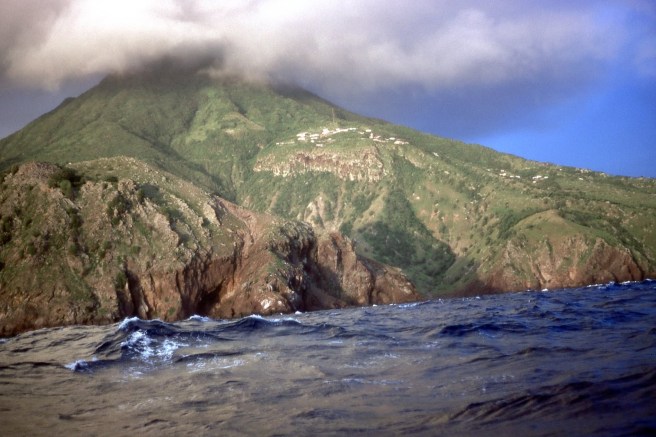
Dawn came, and we apprehensively powered in behind the man-made rock dock, onto which the swells were quite powerfully breaking. A native hailed us, and we came up alongside an inter-island trading vessel. The man was from Dominica, as we made out from his somewhat garbled English, the boat was a trading motor launch for the area and had sprung a bad leak and had barely made it into Saba.
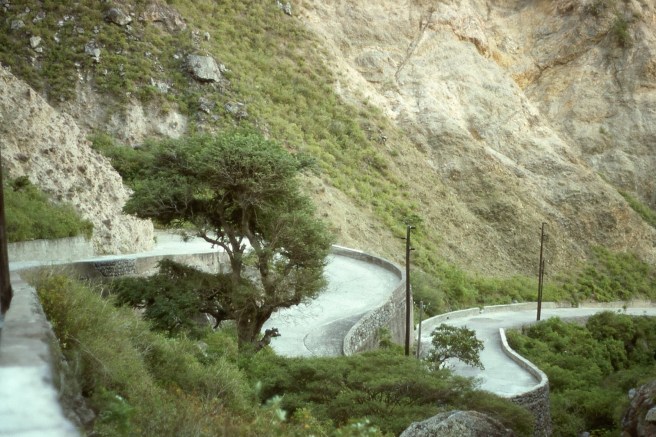
After clearing customs, and taking a well-needed nap, John and I took our turn exploring while Peter watched the boat, as there was some chance the Dominica boat was gong to be leaving, and we would have to move. John and I started the trek directly, it seemed, uphill, a cement road cut through the rock. A truck soon was heard grinding its way up, however, and we were promptly offered a lift. And what a ride it was! Because of the gradient of the hill, the road would occasionally turn 180 degrees around a sharp and steep corner around which the truck could just barely turn. Being of Dutch origin, the roads – all of them on the island – were lined with 4-foot-high stone walls, very dainty and beautiful. All of the houses are of Dutch origin as well, mostly painted white and yellow with colorful flowers bursting out everywhere.
John and I got out, explored around a bit, then met a wonderful 60-year-old woman who was born on Saba, but worked on Curaçao and was back for just the 2nd time in 45 years. She was delighted to meet us “rare tourists,” and together we spent a couple hours, she showing us the sights she was just then rediscovering after so long, picking us papayas, breadfruit, and guava, introducing us to her old friends – old native ladies, all so very friendly and easy-going. We then went to the local bar, had a Heineken for 60 cents and sat down amid native music and an odd assortment of people, old and young, black and white.
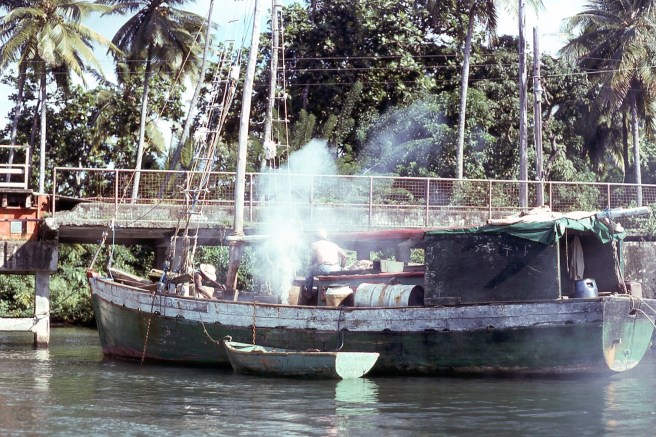
We are tied up alongside an inter-Island trading vessel, and right in front of a trading schooner. The trading schooner is quite a classic yacht, blocks rusting but somehow held together by knots and splices, huge anchors the men must have a hell of a time getting up, sails sewn and patched and re-sewn together, hoisted up by strips of old Manila tied together. The steering house in the stern contains the wheel, an old rusted-out circle with all but two spokes broken off. A rusty stove was mounted on a shelf, a metal bucket below containing a sparse assortment of knives and dishes, and a tub of fish cutlets for dinner lay beside the wheel. So crude and rudimentary, and yet the seamen seem lively, healthy, and talk as though they know no home but the sea.
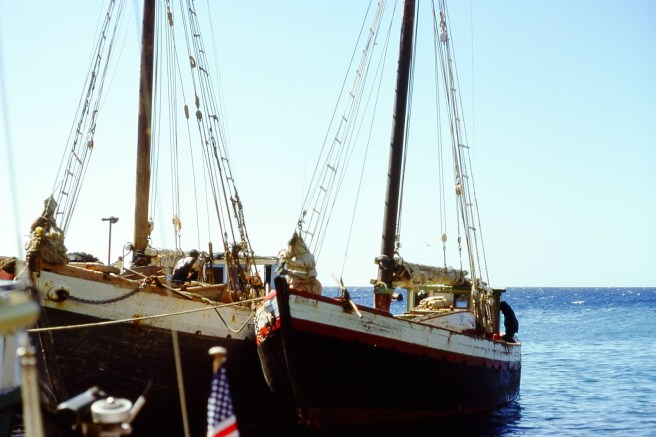
Our friend from Dominica is quite single-minded; in tying up our boat and shifting it when we had to drop astern to let another boat out, lines were to be tied as HE saw best. But he really did know his business, and he safely maneuvered the Celestine through a precarious shifting of docking position amid the dangerous swell. Then he would motion me to come do some drinking with him and waved furiously in disgust each time I refused. The fellow is crude, dirty, shabby, and can barely speak English, yet he is a true seaman and made vigilant watch over the safety of the Celestine in this precarious harbor, even taking some strips of hemp from an old line and rigging them as a chafing preventer over some of our docking lines.
Thanks to the kindness of our friend Eunice, the 60 year old native, we had boiled breadfruit and papaya for dinner last night, with guava as a side dish. I am beginning to love these native foods! We went to the local bar after a long climb last night, but not much going on at all. All the action took place the night before in celebration of Kingdom Day. But we got to know Jerry, the young (25 years) native from the Dominica trading boat. He’s really been great in helping us maneuver the boat each time we are forced to move to let another boat out, and has told us all about the islands around here with which he is so familiar. Apparently he has a dilemma in his life: he has a girlfriend and kid in St Kitts, and a girlfriend (16 years) and kid in Dominica! He will probably marry the one in St Kitts, for even though she is less pretty she cares less about money than the other one, and he thinks she loves him more. But after he gets married he wants to move to Dominica, where he has a house, so he really doesn’t know what to do, as he would then be living near the other girlfriend.
Now I must retrace a bit. Coming over from St. Croix I failed to mention that in the middle of the night, while beating across Anegada Passage, we passed by a yacht, and were soon hailed on the radio. She was a Westsail 32, from Nova Scotia, and headed for Saint Barts. We chatted a bit, then soon lost them astern. Anyway, today, our second day in Saba, the Brett pulled up alongside. They were the boat we had radioed, and both of us, though headed for more northern islands, made so much leeway that we both decided to put into Saba. They spent last night anchored off the leeward shore just around the corner from the harbor where we are now tied up.
The Brett is now rafted alongside us and the Dominican trader, and we are eating dinner together: we’re cooking the papaya and breadfruit, they’re cooking the spaghetti. The owner of the boat used to teach at Yale, so we had a bit of a talk on that subject. We had quite a good time, as the two guys in the Brett’s crew played the guitar so we’re over for drinks playing music, along with Jerry who is also just now strumming away in front of me.
Today I started up the hill and was right off given a lift all the way to Windwardsville on the other side of the island. What a ride, you wouldn’t believe it! We skirted along the edge of cliffs the entire way, overlooking sheer rock dropping below. Now and then we would pass houses perched among cliffs overhanging the sea below. Shortly we came to the town of Windwardsville, quaint, Dutch, all the houses of white masonry with red roofs. The fellow who picked me up took me to see the airport, a strip of runway, very short, where a plane had to go ‘full reverse’ with its engines upon landing if it did not want to drop straight down to the sea below.
I toured around the town a bit, sent some postcards, and remarked on the incredible roads that had been picked and dug by hand out of the hillside by the enterprising natives. I walked the 3 to 4 miles back around winding steep roads to “Bottom”, remarking now and then on the beauty and absolute incredibility of the place. Looking 1500 feet nearly straight down to the blue sea below is an awesome sight to behold! More than once I would gaze down the green mountainsides, look across at the houses perched among the cliffs, the roads skirting the steep rock, look out at the endless horizon, and promise myself that one day I would return to this beautiful spot.
On the way back I passed a native house, and foolishly asked if I could pick some breadfruit from the tree I had spotted. “Breadfruit don’t grow on this side of the island” smiled the native, but he gave me a breadfruit of his own, accepting no money, which he had gotten from the windward side of the island. I’d mistaken an “ordinary” tree for a breadfruit tree.
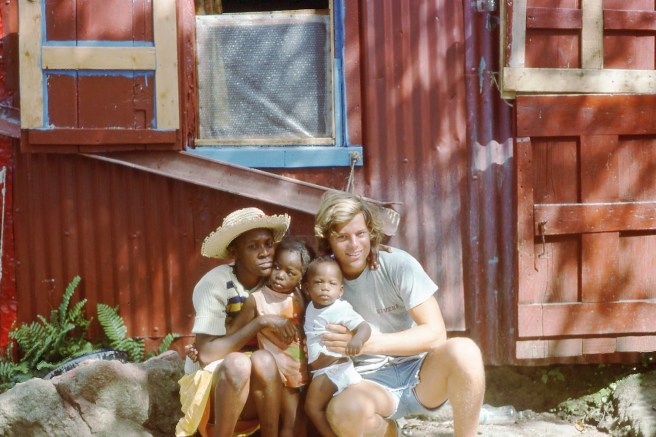
Jerry is now sitting in front of me, composing songs for the girl he loves in St Kitts, and it is beautiful to sit here, listen to the breadfruit cook, know I have nothing to look forward to for 5 months but black music, and tropical fruit, and friendly yachtsmen as we have been meeting all along. I swear to myself I will return here by boat and learn once again that wonderful places like this do exist if you look for them.
The Dominica boat is quite interesting. They have an old compass mounted by the wheel but have no chart. In fact, Jerry has been over taking lessons from us in how to use a chart; how to plot a course, how to figure mileage. They know nothing about this “technology” – they know by heart the rocks and islands, know not how to read a chart, and even had a hard time recognizing on the chart the islands they know so well. But they doubtless can navigate around here better than we can, despite all our charts and radio aids. Nice to see what people can do in the world, and so simply.
We had a pleasant dinner with the Brett crew, spaghetti, breadfruit and papaya. They have aboard the owner who’s the Yale professor (Rene Vidmer), a Canadian “hippie”, Peter, a boat bum from Pennsylvania, and Amy, from Florida, who is down here wandering from boat to boat. She is interested in sailing with us down to Venezuela, so we may find ourselves with a cook later on.

The Dominica boat has quite a story. The captain is corrupt, according to Jerry, and has been telling the owner they have been making little money, while in fact they have been doing fairly well. Moreover, the captain has not been paying Jerry or the other crew members their salary of $200 per month; all they can do is wait and hope they get paid. Jerry is hoping that the captain will be fired; indeed, the captain has flown off to Martinique under the pretense of getting new parts for the engine, but Jerry thinks he may already have been fired. In any case, Jerry is hoping to be the next captain of the boat, and from what I’ve seen of him he seems to be as honest and capable a native is I would think they could find.
Everyone has gone to bed, and I’ve been up talking with Jerry. I was slightly mistaken before; he has a girlfriend and kid in Saint Kitts, a 16-year-old girlfriend in Dominica, and a separate kid in Dominica. We traded pictures and talked of our respective loves at home. Jerry is so intimate, so friendly you cannot help but feel he is a deep friend. He wants to send me a picture of his girlfriend (of St Kitts) and wants us to stop by St Kitts in a couple weeks to see him. Yesterday we had to take the Celestine out to let another boat by, and Jerry insisted on taking the boat back to the dock. This is a rare practice for strangers to dock a boat of mine. But he motored in beautifully, as though he had grown up on modern sailing yachts, and not on heavy lumbersome schooners.
Friday Dec 17
Today seven of us – three from the Celestine and the four from Brett walked all the way around the other side of the island to Windwardside and made a painful and sweaty climb to the top of the 2800-foot-high Mount Scenery, the very top of this fabulous island. Steps carved into the igneous rock guided us the whole way, leading us through wild banana stocks and lush rain forest type vegetation, ducking vines and huge green ferns on route. After an hour and a half or more of steep climbing, we reached the top, gazing with thoughtful inspiration at the lush valleys, the peaks and crests hundreds of feet directly below, with houses tucked in and around the few level areas. The sea seemed passive and gently lapping on the rocky windward side, which we knew to be but a deception, for in reality they are ceaselessly crashing and churning. We would be engulfed for a moment in a blast of cool damp cloud, then out again in the bright sunshine, dazzling against the rooftops so far below. The climb had been worthwhile after all, as we forgot our ascending motto “what fools we mortals be.“ After a cool and restful hour gazing out from the top, we began back down, so easily flying over those rocks which had been so tormenting to us just awhile before. Soon we were down again, stopped in at the local bar (the “Somewhere” inn) for the second time (having had a cold beer prior to our trek as well!), looked about the sleepy little town again, and walked doggedly but contentedly back to the boats.
Dinner tonight, again made in unison with the Brett, of baked papaya, rice and ham with sweet and sour sauce and pineapple. John, Pete and Amy left to go all the way back to Windwardside to go to a dance, while the rest of us were happy to stay home and relax.
Dec 23
Saturday we somewhat sadly left Saba and sailed to Saint Maarten. Phillipsburg was quiet and was “the friendly island” that its license plates boasted. It was only moderately tourist-oriented, people easy-going, quietly going their separate ways. Sunday, we sailed west to Simpson’s Bay and anchored in front of a hotel cottage where George and Dotty Heuer, an older couple from Pennsylvania were staying. We had met them on Saba and were welcomed by them in Saint Maarten. George spent two hours driving us around the island, which was quite a nice gesture, especially as that almost certainly made him late for a dinner reservation. JP and I came back in the evening, and the Heuers lent us their rented car to visit the casino.
Monday afternoon we sailed over to Mullet Bay, the site of an enormous tourist complex and beach, where we tried (unsuccessfully) to get charter business. But we did meet another delightful family, the Lances, from Rye, New York, complete with five kids. Mr. Lance founded Defender Industries several years ago when he bought 100,000 sq yards of scrap fiberglass from a company, and began selling it, expanding it to the business it is now. The whole family helps cut out pictures for the catalog now, pasting them to blank pages, and then filling orders as they come in.
The Lances treated us to a Chinese dinner that night, then we went back to their cottage for anniversary cake and ice cream. Tuesday, we took the kids sailing and snorkeling over to Anguilla, a rather long, low, and boring – looking island.
Wednesday we ran aground trying to get into a dock for some water, but made it to St. Bart’s in the afternoon after stopping at Isle de Fourche where we speared four fish for dinner. We are now anchored stern to the edge of the lagoon here, which seems to be the going method of anchoring here, so we can haul ourselves in and out in the dinghy by the line tied from our stern to a cleat on the dock.
St Bart’s is all French, another quiet, but more sophisticated town. They don’t have the shops or bakeries Marigot had, but it’s a nice place to roam around, listen to the French people talking on the sidewalks, and watching the bright array of “cultured” styles of clothing drifting by.
Dec 25
So,, this is Christmas, is it? The only thing special about today was that we were able to have some canned bacon we had brought along for breakfast. We played “Oh Hell” during breakfast (not a very Christmasy sounding name!) to prolong our enjoyment of bacon. Also we had a real treat, orange drink, which had been given to us back in the Virgin Islands by some charter people. After breakfast we opened our “presents” -mostly little packages of exotic freeze-dried foods from the Arndt family, and for me, a fabulous shirt from Judy and Kris.
Christmas day J and P tried calling home, but were told to try at night. So after our Christmas dinner (a small portion of canned roast beef, leftover bacon, au gratin potatoes, corn and chocolate cake) we went back to the bar, tried calling again, but could not get through. We wandered down to the point, where we found another bar, and after some delay J and P got through, and rang up what must have been a hundred dollar bill calling home. I then placed my call. A half hour later, an American operator tried several times but said the lines to Maine were all jammed. “Sure, buddy.” I waited another hour and a half, trying now and then, or rather getting the bar man to try for me (as it must be done in French) but getting nowhere. Eventually we could not even get Guadalupe; A common occurrence at night, according to the maître d’, is for operators to fall asleep, or disconnect the phone, or whatever, and I am once again resigned to try tomorrow.
January 7, 1977
I forgot to mention that much of Christmas day for us was spent varnishing. Sunday the 26th, we took about a 35-year-old guy and 25-year-old girl, Phyll and Robyn, to a nearby Cove. We tried spearfishing but without luck. Phil and Robyn are from the New England area and are on their way to Brazil, then on to Africa where Phyll has a job promise in about our year. Whew! It was super talking to them, another free spirit couple who knows great things can be done without huge resources, who feel there is more to do with your life then sit down at a desk 50 weeks each year and take crap from your boss.
Monday we bought 10 Litres of good red wine for $12. It came in a beautiful plastic jug which of course is the reason we bought it. Then on to Statia. After a slow sail across, we rounded the stock steep cliffs off the lee shore, bold, barren, lifeless, and soon came into full view of Orangestead.
We went ashore in the evening, exploring by twilight the restored fortress high overlooking the harbor. As we were to find out, and as it was inscribed on various plaques here and there, this fort was the place the US flag was first saluted by a foreign country, when the governor of Statia saluted an American ship in the harbor in November, 1776. The people on Statia are pretty hyped up about the bicentennial, looking forward to the cruise ships scheduled to start coming in, and making their island license plates in the design of the bicentennial emblem. This seemed a bit absurd for some tropical island semi-paradise; perhaps they were hoping for American aid.
The next day we climbed to the rim of the volcano on the eastern side of the island. What an impressive sight! The sides of the volcano all around us are quite steep, in many places vertical walls extending well down in the center of the volcano. Our climb up, though on one of the less steep areas, was still almost like climbing a vine-overgrown ladder in places.
The actual rim of the volcano, which we poked our way partly around, is in most places only 15 or 20 feet wide, dropping steeply off on both sides. Really unbelievable. We would climb through thickets, across roots, over trees, stopping now and then at a semi clearing where we could climb out on a moss-covered limb to behold the immense facades forming a circle all around. On the limbs we were probably suspended higher than we would care to believe above ground, since it sloped so steeply below us, but this we would never realize because of the dense foliage everywhere concealing whatever dangers lay below.
We spent the rest of the afternoon wandering around town. The people seemed friendly and lonely, somewhat as on Saba. The houses, most of them, we are pretty rutty, chickens running all around the streets, a general air of poverty throughout. Along the edge of the harbor stirred the decaying signs of majestic Orangestead; the ruins of a mile and a half of merchant warehouses, the remnants of what was one of the largest trading ports in the Caribbean. But after Statia’s 1776 salute to America, the British, under admiral Rodney, took revenge by blasting the rich city to shreds in 1781, leaving the poverty and skeletons that are Statia today.
At 3 AM the next morning we weighed anchor and sailed for St Kitts, using the opportunity to learn several stars en route. We finally arrived in Basseterre around 11 AM, having been caught badly on the wrong side of a wind shift in the middle of the night which just about wiped out about four hours of previous sailing.
We were met at St Kitts by 2 native boys who rowed out in a home-made “dinghy” made of logs tied together. The things looked and were shaped and rowed just like dinghys only the water flowed freely throughout them, so the boys were rowing in water up around their hips! But that was about all we saw of St Kitts; the town of Basseterre was dirty, poverty-stricken and dangerous we’d heard, and we were anxious to get to Antigua in plenty of time for New Year’s.
We left Basseterre that evening and sailed once again on our fly-by-night system. After a moderate-breeze beat all night, we made our way towards the cliff- bound southern coast of Antigua and into the narrow entrance to English Harbor. Tying up stern two to the dockyard, we were met by Rene, our friend from Saba. After clearing customs, we met him at the Admirals Inn, a place we were to get to know well, where he treated us to noon time Pina coladas and BLTs.
After mooring the Celestine and cleaning up, we left the dinghy on the anchor and sailed out to race in a local Thursday night race, finishing third and placing third on corrected time.
Friday, New Year’s Eve, we sailed up to a nearby cove, very secluded and peaceful, and spent the afternoon cleaning the boat’s bottom, sanding, and otherwise cleaning the boat. Then we sailed back into English Harbor and back to our mooring anchor.
By a stroke of luck, John decided to row the trash ashore as twilight approached. I was just beginning to cook up a pot of spaghetti when John came back with the news that there was a New Year’s eve potluck supper at the Nicholson‘s. So we cooked up an extra huge pot of spaghetti, spiced up ourselves as well as the spaghetti, and headed ashore.
After a bit of a walk we managed to arrive at the Nicholson‘s house, without spilling our pot full of spaghetti. Mr. Nicholson (about 45 years old – one of two sons of the modern “discoverer” of English Harbor) greeted us warmly, his wife took our spaghetti, and Mr. Nicholson brought us around to the bar. You look at a well-known British gentleman like him and figure he must be a bit stuffy, but this thought was quickly dispelled – “Let’s get bloody drunk tonight, damn it,” he yelled, in quite proper British accent.
As we later learned, this was actually an invitation type dinner, not an open house. Perhaps the Nicholson‘s were a bit surprised at our boldness in entering and making ourselves perfectly at home. But their friendliness did not show this. Anyway, as we later learned, they did not know the first dozen or so people to arrive! Rumors certainly had gotten around.
At dinner I met a young British fellow, owner of a 48-foot sailboat, and his wife. They were quite the jokers, seemed to have no cares in the world but that the liquor stores wouldn’t be open for a couple of days. Then an old woman came up and began talking to me, asking where I was from, etc. She must have been a bit surprised when I asked her who SHE was, for it was THE Mrs. Nicholson, who, with her husband, had settled English Harbor 25 years ago and built the ruins of the English base into the yachting center it is today. Actually, we later learned she was only a second wife of recent months, after the original Mrs. Nicholson had died.
Anyway she laughed, explained who she was, then introduced me to Mr. Nicholson, a plump and jolly old fellow who was even more lively than his son. For someone so well-known and well off, and pretty old to boot, he is certainly quite a joker, quite a partier, and quite a kid at heart. Anyway I (and later J and P) thought it quite something to meet and listen to him. His wife then invited us to their weekly Sunday cocktail party at their house.
Later everyone went to the Admiral’s Inn, where the whole harbor seemed to be dancing. I met, amongst other people, the cook on a 65-ft cruise boat, and another girl from the US who was on her way to get a job on St Croix. She later asked me to come live with her in St Croix which of course was impossible. This was New Year’s Eve, so the Ads, as the Inn is called, had a steel band. Firecrackers going off were the only real call to New Year’s, but at least that did result in some long awaited kissing!
One thing about the Nicholson‘s party I forgot to mention was that everyone seemed to know the “Maine boat” and expressed interest in our trip. This was odd since there were so many around-the-world type sailors around, but people were nonetheless very interested in our trip and perhaps envious.
Saturday, New Year’s Day; hangover city, spent with JP and me seen trudging across the peninsula to a beach where the cool waters refreshed us a bit. That night, another night at the Ads where we met several of the local girls, were treated to several drinks from René, and saw Amy who had been on Rene’s boat in Saba but who now works on a charter boat. The four or so local girls we met were quite well connected; Winky, whose father owned a huge posh resort at the mouth of the cove, Sarah and Libby Nicholson, cousins and granddaughters of THE old Nicholson couple, and Cary Byerly whose father owns the PJ 34 we raced against, placed second overall at Antigua race week the last couple of years, used to own Lord Jim, writes a regular column for Yachting magazine, and wrote a major section of one of the cruising guides we are following! Sarah Nicholson went to Andover which was especially interesting as she was among the group that went to Exeter and painted the stadium blue only to be caught in the act. She now goes to Connecticut College, but most of the others go to school in England.
Sunday, we raced again, this time against 16 boats, placing fifth.
The post-race party was fun. Quite some tiny bathing suits on the women, I might add, many of whom had caused us much distraction by going topless during the race. We found out that one racer, La Zigue, a 46-footer, had 16 people aboard representing nine nationalities! Many of them could not even talk with one another.
Later we sailed back to English Harbor. Here I might do some bragging. For the third straight time I steered the “Celestine” to our dinghy mooring. We would drop the jib, sail downwind a ways under main, drop the main as we rounded up behind a sailboat and coast to the mooring, each time hitting it with a ghost of headway left. A bit nervy of a procedure to do in this crowded harbor with quite a number of yachtsmen looking on but we did it quite professionally each time.
That night we went to the Nicholson cocktail party. Not many people were there, actually (it being a weekly event) so we met quite a few of the Nicholsons and old Mrs. N gave us a tour of their old house. We saw their world-famous bathtub, a glass fixture with seashells, sand, and ferns etc. laid out around the bottom and outside of the glass so it would appear you were bathing in the ocean! The back room of their house is a huge vault which is where Nelson stored gun powder over 200 years ago. All in all the Nicholsons were fabulous people, are great partyers, and made us feel welcome to come visit them next time we happen to be in the area.
Monday we took Winky and Cary and a few other assorted kids spinnaker flying which was pretty hairy in the brisk trade winds. Then we went free planing which is towing on a surfboard behind a motorboat and more of a hairy ride that it sounds.
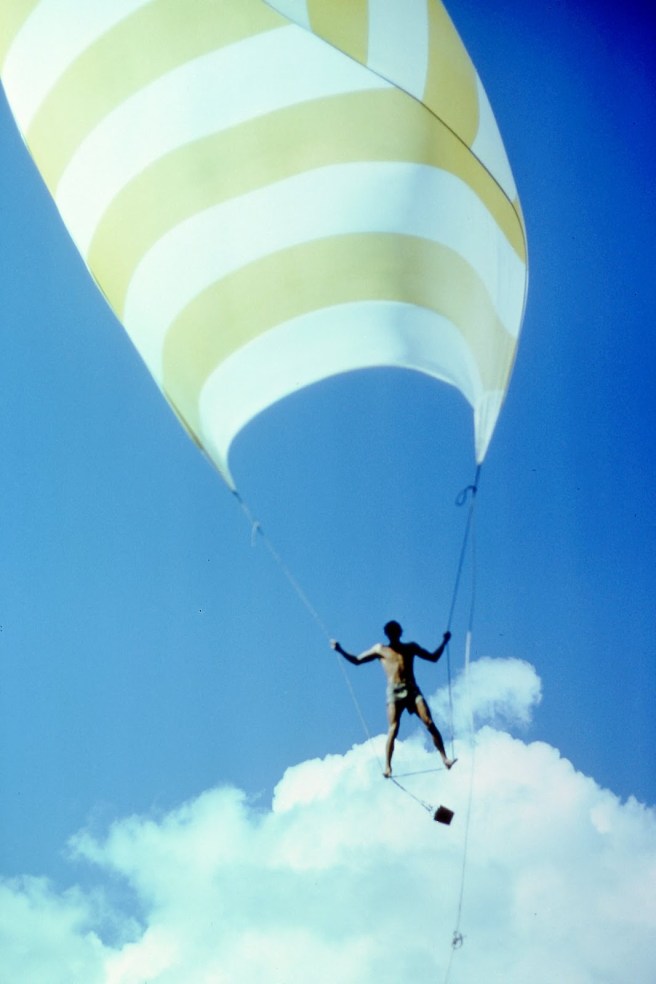
Later that night, 2 AM to be exact, we got the crazy urge to go sailing so Winky and Cary guided us sailing all night to Green Island on the eastern side of Antigua. After sleeping all morning we explored this lovely little sandpit, dove and caught five large lobsters, then sailed back by late afternoon to English Harbor.
At 6 AM the following morning (it was supposed to be 2 AM but we overslept the alarm) we sadly left wonderful little English Harbor and what seemed like a million new friends we had made and sailed for Guadalupe. After an easy reach at 6 knots we arrived in Deshayes on the northwest coast early in the afternoon. John had a hell of a time trying to find customs and as he can’t speak French too well, I went ashore as skipper to see what I could do. I found customs but by now it was 4 30 p.m. so we had to wait until the following morning.
Deshayes turned out to be a quiet, semi-friendly town where we found a couple of little pastry shops and watched a couple of woodworking shops in operation. In Deshayes, as in many other places we’ve been to, shops are not advertised by any signs out front – you just see an open door, look inside and see if it looks like a store. Often times you will find yourself looking into a musty bedroom or a makeshift kitchen.
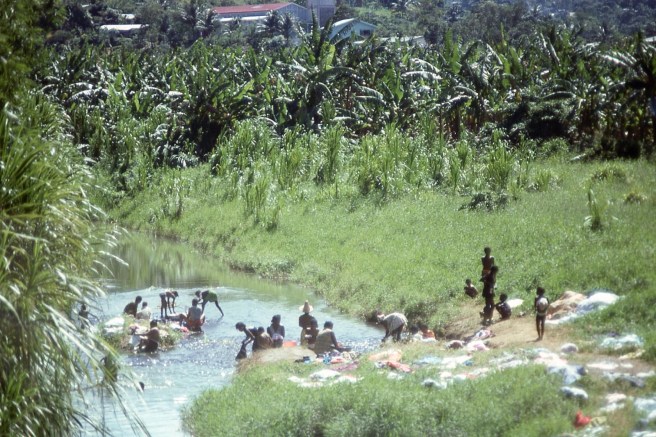
We wandered up a stream a ways, with beautiful pools leading into miniature waterfalls. The women were all washing their clothes here, and some native boys bathing, but we were afraid to swim for fear of getting a freshwater parasitic disease common on some of these islands.
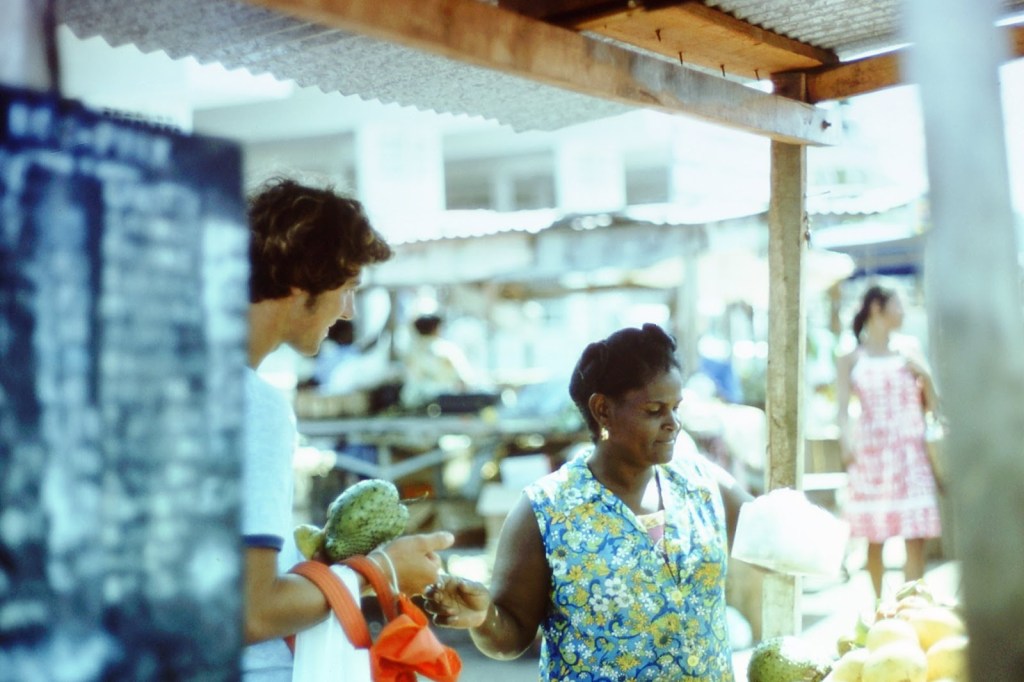
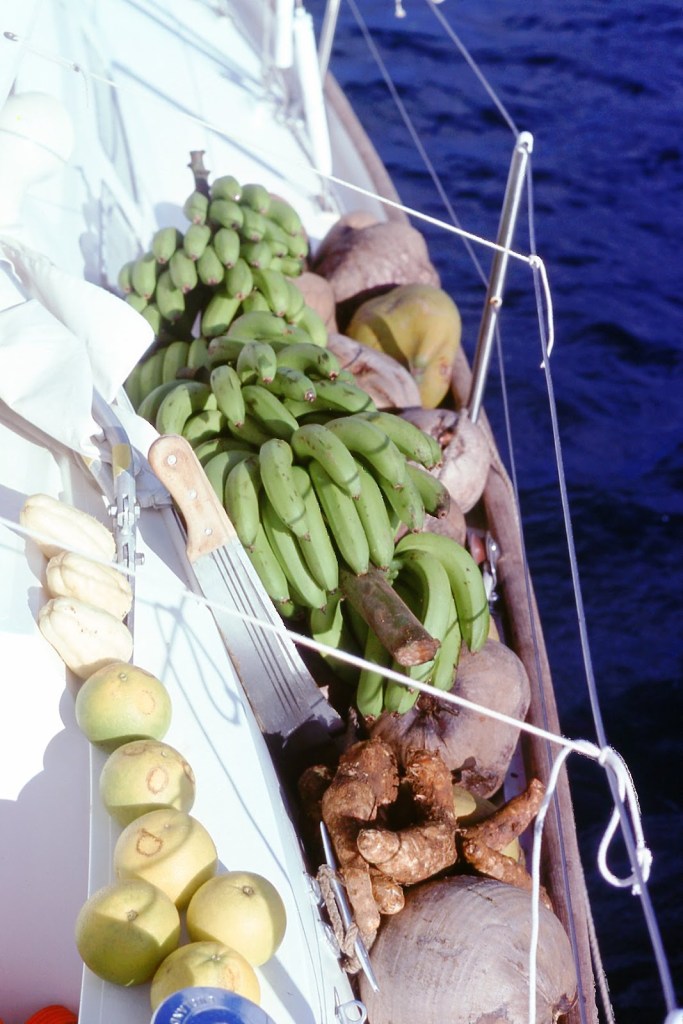
That afternoon we sailed to Basseterre, a quite-busy, fairly good-sized French city which does not seem to quite fit in with the palm trees and lush mountain tops rising up behind it. We found some delicious pastry shops, got a taste of French native women dressed in high fashion, and then the coup-de-grâce – we went to the farmer’s market. Here we had the best time, going from booth to booth tuning up our French. “Combien d’argent pour ces bananes” I would ask. A lady would say “quarante francs”. “C’est trop, c’est trop” I would say, feigning disgust. Eventually we worked our prices down and bought a stock of bananas for 20 francs ($4), some christophine (delicious boiled, we found out), okra, prickly pear, and grapefruit. All for pretty good prices, and much fun. It is especially good we are getting all these vegetables for we have been making entire meals of them (along with perhaps a can of soup) and so have been sparing the dwindling provisions we brought from home.
That afternoon we sailed over to Les Saintes, a group of beautiful islands 5 miles south of Guadeloupe. En route we tore the #1 Genoa, which will be an added expense to go with the 2 winch handles and the docking line we have lost so far (the latter 3 all from going overboard – the docking line went over in Gustavia, St Bart’s, but the water was too murky to find it).
The Saintes were beautiful. We spent our first night anchored off a palm-fringed shore under the lee of a high cliff. The next day we sailed around to a cove on the windward side which was a bit tricky to get into but very calm and serene once inside. Then we sailed back around, anchored off the main town, and climbed to Fort Napoleon at the top of the hill. What a magical place! It really seemed like it was out of the days of knights and squires. The fort is huge, built all around the top part of the mountain, and is surrounded by a deep (probably 49 ft) wide (probably 30 ft) moat. A drawbridge lowers down to the path outside, a drawbridge with its own counterweights and a lever for opening and closing it.
Inside is quite a place – dozens of pitch-black rooms with a strange rock corridor all around the room, seemingly leading nowhere. It took quite some daring in the absolute barren dark to poke around, but we did make a circumnavigation of the room. There is quite a huge area inside, dozens of rooms, hallways, a large barracks with row upon row of large, barren cement rooms, where presumably old French commanders slept and made battle plans. Also, built into the ground here and there are small vaults, each with an inner and outer room, where possibly they stored gunpowder, ammunition or whatnot. A bit down the road from the fort is the very realistic sobering remnants of an old prison. With two double rows of cement cells, each about 12 ft by 5 ft, dirt floor, and what apparently were solid (as opposed to barred) doors, it would have been a very crude and torturous place to be locked into. With the doors closed they must have been pitch black, wet, dirt floored, buggy. It is still in pretty good repair, and indeed was used to imprison free-French supporters during WWII.
From here we took a bit of a roundabout route to the windward side beach. Specifically, over two hills, cactus and brush infested, and through the center of a cow pasture where quite a number of bulls looking our way made the drops on our foreheads glisten a bit more. Eventually, scratch-laden and weary, we got to the beach in time for it to rain. However, the surf was quite spectacular, and we spent well over an hour riding the waves in, planing along wildly on our stomachs, now and then getting wildly picked up and spun flying into shore. It really was exhilarating. On the way back to town we bought a breadfruit from a local native, sitting in her doorway, and a franc’s worth of fudge from a cute little French girl.
The following morning we reached over to Dominica, arriving in Portsmouth in late afternoon. We were greeted by a swarm of young kids, all offering us their services for giving us boat rides up the river, or getting us vegetables, water, or women. A 207 ft cruise-sailboat soon came into the harbor and anchored, and on their way to shore one of the passengers called to us to stop by for a beer later on. So stop by we did, and what a stop!
First we were met by the captain, a middle-aged Greek who was not expecting us, but who treated us to plenty of beer nonetheless and asked about our trip. Then we were swarmed by a pile of mid-20 year old girls, all passengers on the boat. All night long we were treated to beers from them, who seemed to act like they hadn’t seen any guys in a longer time than we had seen girls. Anyway we met quite a number of diverse passengers, mostly American. We helped ourselves to hot showers, and finally after all the partying made ready to go around 4 AM. But passing the kitchen one of the passengers found the kitchen key hidden by the galley, so before we knew it we had 4 eggs and a jar of honey to bring back to the boat, compliments of the rowdy crew of the Adriane. They are scheduled to be in Fort-de-France, Martinique Friday, which is when we’ll be there, so we may find ourselves partying some more before too long.
The next day we paddled up the Indian River, a mountain-fed stream that empties into the ocean. It was quite a fabulous row through the winding stream, overhung and completely covered by large trees with vines hanging down over the water. Now and then we would have to portage the raft over some semi-rapids, glide past palm trees and fields of banana trees, listening to unseen birds chirp in unfamiliar sounds. We fully expected an alligator to slip into the water behind us, or a band of headhunters to leap down upon us from the trees. This really seemed like the makings of a true jungle river.
The town of Portsmouth had a sad air – people were not so friendly, obviously did not like having their pictures taken, did not seem proud of their homes or their lives the way people on Saba, to pick an island, had. We met the first true wooden-legged person I have ever met. I think if I ever lose a leg at sea I should like to have an “Ahabian” wooden leg. There is something earthy and elegant in it.
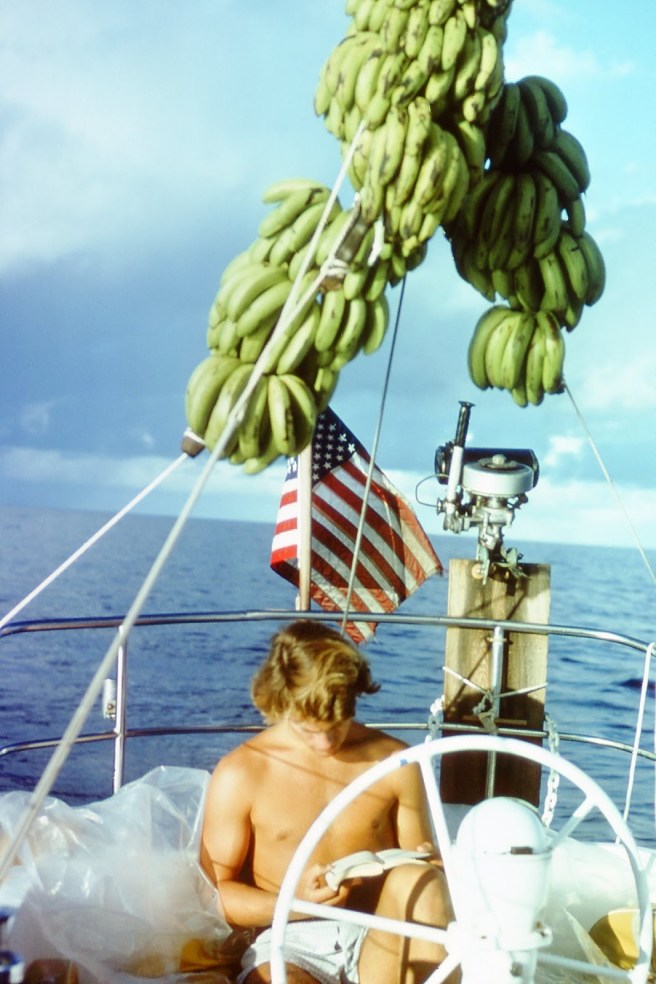
The value of the American dollar was evident here – we could have bought some hand-made straw hats or baskets or handbags for $3 – 5 EC (Eastern Caribbean Currency) or $1.20-2.00 US. We did buy some delicious muffins for 6c US each, some christophine, arrowroot, and then some grapefruit (6c US per grapefruit). Then the real killer. On the dock a native lady was directing the loading of a truck full of bananas onto the dock. She sold us 2 stocks of bananas (to add to the one we already had), 80-100 bananas per stock, for the absurd price of $2EC or about 80c US per stock. We laughed the whole way out to the boat, it was just such a great buy.
We got up at 4 AM the following morning and mostly motored southward along Dominica’s western coast to Roseau, the main town. This is a dilapidated, sad, non-friendly town with a few clothing and appliance shops, two banks, and little else. People seemed lifeless, colorless, and non-friendly, except for the two or three guys who pleaded for us to take them cruising, or who offered to sell us grass. We did buy a papaya for 50c US and limes at a penny apiece.
We cleared Dominica and left Roseau at noontime, and reached across to St Pierre, Martinique, which is where we now are. Haven’t had time to get ashore yet. We dined on papaya and arrowroot bought in Dominica, played the usual game of Oh Hell we play every dinner (to make us eat slower) and talked, as we have been talking recently once again, of our plans for one day sailing around the world. I have finally finished Moby Dick, which I enjoyed very much, especially for the idea of being able to so freely cruise the world’s waters. I am now reading The Hobbit, which is another freedom-inspiring novel. J and P have each just re-read Dove, the story of the 16 yr old who sailed around the world, and we have concluded that it is inevitable that one day we shall do the same. One thing about this trip for me is that doing this has made me realize that I can do what I want in the world, that is I do have the ability to do things like this if I want to. So many people we have met are making fabulous lives for themselves from the merest of means. From what you put into it, you get so much out of distance cruising it is crazy to content yourself with a life in an office and a house in the suburbs. The realization of self-determination I actually got in a letter from a Yale friend, Monie Thomas, who wrote of her own experience: “Somehow the few adventures I have had in my life have been a great source of strength for me…I think it gave me a confidence in myself and my ability to choose what kind of life I could live, that I wouldn’t have otherwise had.” I think of what experiences I doubtless might have in another trip like this, think of the 40-hour a week alternative, and think there must be some sort of compromise possible, without compromising the rest of my life to an office. I feel somehow I was born for more than that, feel I want to know more about the diverse islands of the South Pacific, feel I want to see them myself, feel I want to get more than the usual out of life, “and not, when I come to die, discover that I had not lived.” So far this trip is perhaps the longest period (3 months so far) in my life when I have not seriously wondered, at one time or another, what is there to do in life, what’s the purpose of seeking status and wealth and conforming to organization rules and businessman stereotypes, subduing your inner soul and curiosity and hopes and dreams and life-fire in place of social norms of “do this”, “don’t do that”, and a life full of figures and facts, laws and books and secretaries and mortgage payments. People were meant to live freely, richly, diversely. At least I think so. And this cruising life seems to fulfill those needs.
Looking at some Dominica schooners yesterday, solid, heavy boats, I can say I am damn tempted to buy one. With the standard of living down here I would think one of them might be had for only a couple hundred US dollars. What a great, roomy, solid boat that would be to fix up inside and go cruising. Inexpensive, roomy, and cheap so that you wouldn’t have to worry much about the varnish bubbling, or gouges in the side. You could take a boat like this on a trip, and then dispose of it. Most of them are 35-40 feet, made of heavy timbers, and gaff-rigged. You could really make some roomy quarters down below, perhaps add a bowsprit with a good-sized genoa, and while they are slow, still get places in one of those boats. They look like you could really pile on sail area.
January 12, 1977
Really getting psyched now about our next trip. We put a map of the world up on the wall; last night the islands in the South Pacific – the Gilbert and Ellice Islands, and the Marquesas – all caught my eye; this morning Newfoundland, Baffin Island, and Greenland were most fascinating, along with Norway, Sweden and Finland. It would be so easy to buy an inter-island trading boat, make a few nice roomy staterooms below, and sail her north one summer. So many places to see, and this year is only the beginning.
Perhaps a good time now to start some notes on food provisioning. In general our food supply seems to be a pretty good selection. We crammed just about all we could fit into the boat and for the 3 of us, over 7 months, supplemented with fish and local vegetables, it looks like it will just stretch through. We are running short on several items however, of which it would be wise to bring more on a future trip: instant rice we use all the time added to Cup-A-Soup, and that is nearly gone. Potato Buds we would cook up, add a can of mixed vegetables and tuna fish, and that has since disappeared. Wheatena we eat for breakfast all the time and that is fast dwindling. Pancakes we really went through our supply quickly (Aunt Jemima pancake mix) but the past month or so we haven’t found any cheap eggs, so have instead been making “wheat cakes” of flour, water and baking soda. Canned mixed vegetables we also ran out of quickly.
We do, however, still have over half our supply of pizza left. Pizza is a good item to bring lots of – tasty, and stores well. It’s only drawback is that it requires 16 minutes of cooking time.
Mushroom soup is a good item because it goes well in anything – with green beans and corn, for gravy, with vegetables, etc. Pork and Beans is a good item because you can eat them cold, when it is either too hot, too rough, or you too lazy to cook. Plenty of Cup-A-Soup, spaghetti, tuna, deviled ham, various vegetables, flour and lemonade mix are all good items for us to have plenty of.
Surprisingly we have not grown tired of any of the meals we have a lot. This is partly because we are able to keep a fair amount of diversity with fish, local vegetables, and various innovative dishes with the stores we do have. Also, interestingly, we have now gone a month without ice, and do not miss it in the least. We now have to eat vegetables soon after purchasing them, and cannot keep eggs, etc long, but that has been no problem and certainly does not justify the added expense and ordeal of getting ice. I believe I wouldn’t mind cruising anywhere, even around the world, without bothering to keep ice.
January 13
Just caught myself looking at my business textbook as it sat on the shelf. At first I thought I wouldn’t like to have a look at it. Then I thought of the millions of men, and some women, who have spent and are spending their whole lives absorbing themselves in those numbers and graphs and schemes. I have been meeting people who have been spending their lives absorbed in sails and sun and foreign cultures, in fish and native vegetable markets and days in the outdoors and in the water. I wonder how many “office people” have bought a live rooster, after bargaining for it in French with an old native woman, killed it, plucked it, cleaned it, and eaten it. Well, this trip is just a start along the road of fulfillment and adventure for us, but today we did buy a live rooster, for 30 Frances, killed, plucked and cleaned it. In fact John just this minute is washing it in cold water. You’ll have to wait awhile to learn how it tastes. We’re planning to bake it.
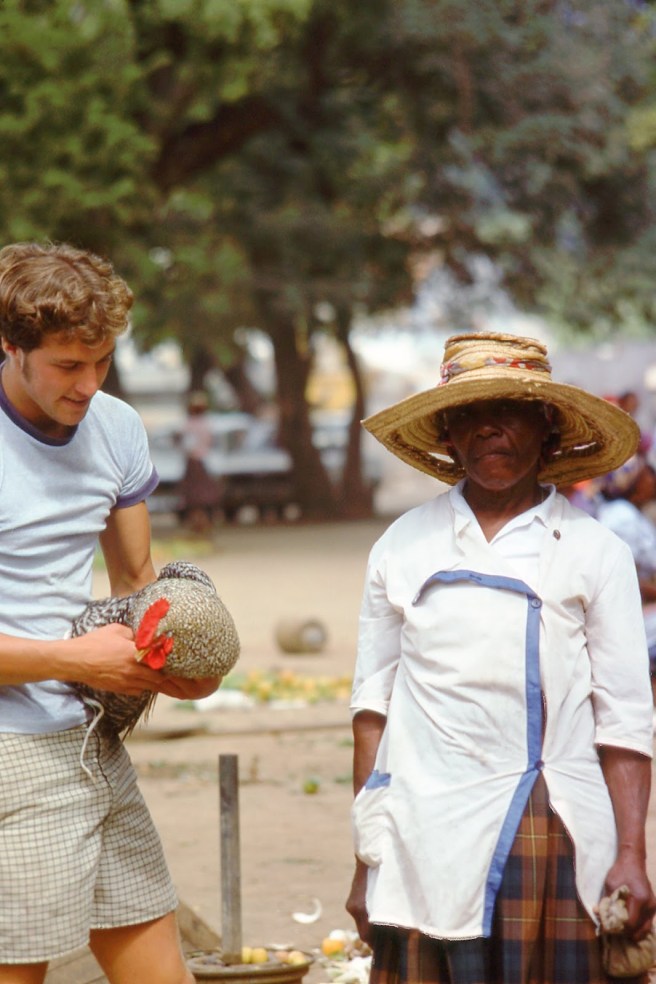
Today (we’re now in Fort de France, Martinique, by the way – will have to retrace a bit in a minute) we also bought some yams, christophine, and rum besides the rooster. Had breadfruit and christophine for lunch – breadfruit sure gets rotten fast, though, and we had to throw half of it out. It seems like my whole day has been spent running around – I was the chosen one to go after propane. At 2:30 (we’d just heard the place closes at 3) I took a taxi several miles out of town; whizzing along at high speed in much traffic is a bit harrowing after 4 months on a gently splashing boat. I got dropped off at the right place (the Lord must have been guiding in the car because my French, from the hurried directions I’d received from a fast-talking Frenchman, were in no condition to get me there). I filled the tanks, and immediately hitched a ride with a gas-company employee partway back to town. Then I found a communal taxi for the rest of the trip. This is a long car (3 rows of seats) which runs at scheduled stops, in the same way a bus does, but with far less passengers. It was a new experience being wedged in with six fast-talking French women while I sat wondering if I was even going in the right direction. Actually they did ask where I was from, etc after I’d asked if we were headed for Fort de France.
So today we got propane, have been ferrying water out to the boat in a 5 gallon, and now our 10-liter wine jug, and bought a rooster. Yesterday is only day I missed writing about. In St Pierre we bought sugar cane (sweet and chewy), the breadfruit we had for lunch today, and some christophine. Then we went to the local musée (museum) which is all about the town’s famed disaster: in 1902 Mont Pêlé erupted, killing all but one of St Pierre’s 28,000 inhabitants, after gushing a hot melted river of lava through the ground and down to the sea. The riverbed is now fairly green with vegetation but, as a huge ravine in the side of the mountain, it is still very apparent. The one survivor, by the way, had been locked in an underground prison. The lava flow leveled the town, quite literally. One façade in the whole town was left standing. Pictures in the museum showed towering billows of smoke and ashes, and later photos showed streets swept clear except for a layer of hardened lava, with charred bodies strewn here, carriages and horses tumbled there. Today the town has been semi rebuilt, though it no longer has the grandeur and the warehouses and the fleet of cargo schooners moored out front, pictures of the olden days which are remembered only hanging on the walls of the museum. And Mont Pêlé is said to still be smoking, to rumble and bubble hot lava at times, and still smells of it’s deathly sulphur.
Cleaning a rooster is really not much different than cleaning a fish. He squawked surprisingly little as we were chopping his neck off (which took only a couple good swings with John’s machete, bought in Dominica). Then off come the feathers quite readily (no harder than scales on a fish), a few cuts here a few cuts there and out come the guts, and you wash him out. We’ve been following the directions for cleaning a chicken from The Galley Guide, quite a diverse little cookbook of mine. Actually, though, for 30 Frances ($6) there really isn’t much meat on the little devil. But the experience was well worth it.
January 25
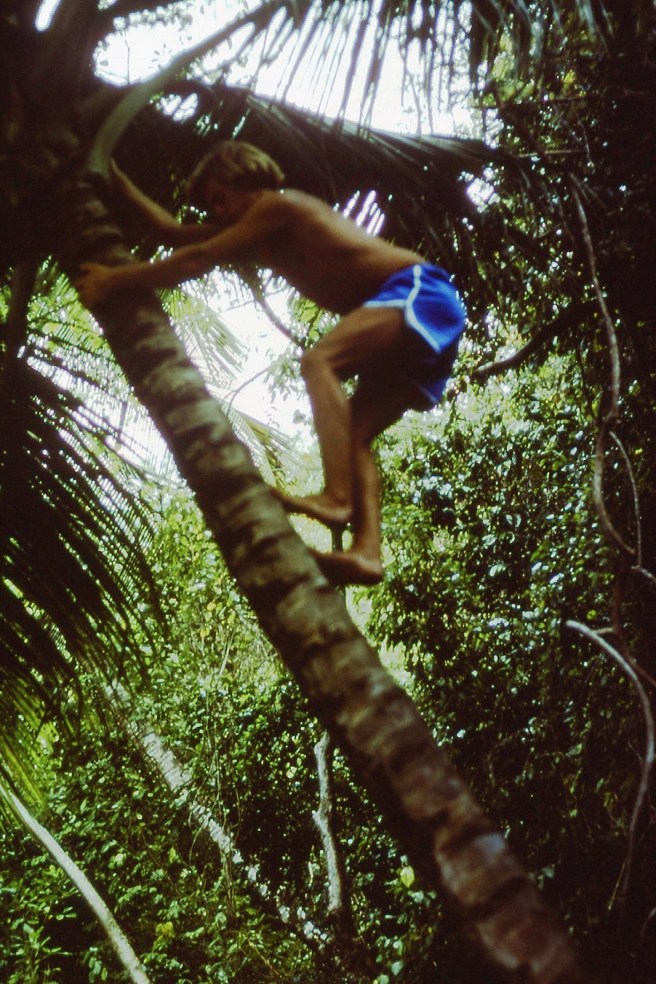
The weekend after the rooster was mildly interesting. We took 3 girls from the Adriane sailing. They treated us to champagne which was excellent, and only $1.20 a bottle. Later we sailed around to the east coast of Martinique; tried to get through a mud bank to a beautiful little cove, but never could find the channel in. So we spent the night anchored in the “outer harbor” in the semi-lee of an island. 3 of us went ashore and husked coconuts. Unfortunately, I had gotten a flaming sore throat which, by the looks of it from a description from “First Aid Afloat,” needed penicillin. So the past week was spent as such. It gave me good excuse to spend long hours living The Fountainhead. That had the effect of reinforcing some latent beliefs and aspirations I already had. It reinforced my belief that your life is your own doing, to be lived by you and for or from no one else. That self-respect must come from within you to be of any meaning. That people must live of their own strength, to accept nor give pity or power. That you must survive, of your own self-sufficient ego, depending on no one else to set your goals for you, give you respect, and so on. Much more to write about but I would hope it’s all within me and doesn’t need to be written down on paper to prove itself. Having a philosophy is meaningless unless you sincerely live by it. I try to. And generally do.
Also I just reread of Shackleton’s voyage around the Antarctic area. After reading of his 17 months camping on cracking, melting ice floes and sailing in open 22 ft boats in the coldest and stormiest seas on earth, I think of sailing around the world as an adventure equal to lying in a lily patch. Probably among the most fulfilling aspects of a life are the adventures, the serious, risky, trying ordeals one goes through. Looking back on my life I would say that our 11-day passage to St Thomas was the single event I am most proud of, that meant the most to me. Reading about Shackleton, I admit frankly I am deeply jealous of each of the 28 men who lived through that adventure. I spent 24 hours after finishing the book, scheming and dreaming of sailing a small boat down to Antarctica, and having “some fun” with the weather, the ice, the gales, the snows, the bitter cold. I might rather go there than come back here to the Caribbean. At least the elements there might shake into me some truly memorable moments, more significant than six months of leisurely blissful inactivity which it seems living in the Caribbean epitomizes.
St Lucia was more of the same – a dirty harbor-side (in Castries, at least), a large and good market, offers by dope salesmen, and, at last, mail. Marigot Bay, however, was beautiful- very quiet and well protected, and secluded, white sand beaches fringed by palms, mangrove trees overhanging the water at the head of the cove. Very serene. We spent a morning walking to “town,” comprised of a bar where I bought a soda for 11c US. But to get to the bar we walked mile after mile past a banana plantation – it looked just like the acres and acres of cornfields you see in the US.
Our next stop was our most magnificent so far, the Pitons of St Lucia. We dropped a stern anchor in 70 feet of water, tied a bow line to a palm tree, and stretched our necks to look above us, high in the clouds, the peak of one of the two Pitons jutting straight up from off our beam.
The white sand beaches, the palm trees, the lush green hillside supporting the strutting volcanic shoots high above, was truly awing and cast subtly but thoroughly a feeling of peace, of joy, of exhilarating relaxation. It was an appropriately inspiring atmosphere in which to finish The Fountainhead, which was soon a fait accompli.
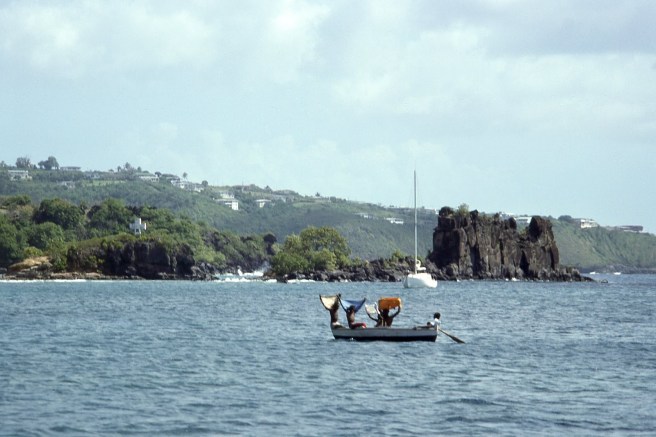
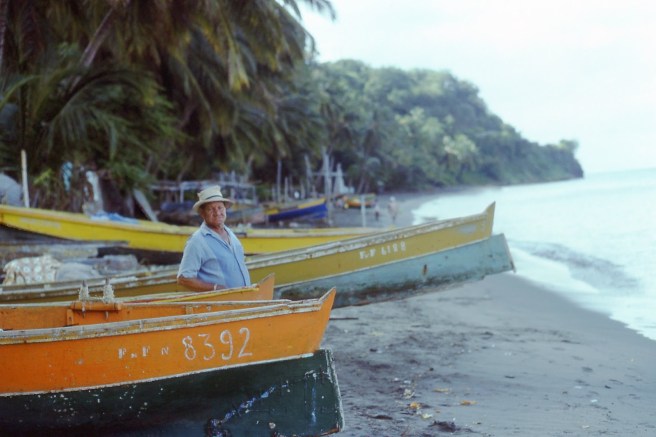
The next morning an early (5 AM) start to St Vincent, a quick reach the whole way. Our port of entry, Kingstown, is the most repulsive place I have probably ever seen in my life. We can directly quote phrases such as “I’m going to get my cutlass to knock your block off,” “I am going to slash your dinghy to shreds,” “I’m going to report you to the police for having drugs aboard.” All from native fellows about our age, all demanding money, or threatening damage. One fellow carried a knife on his belt, walking around with us a whole afternoon and the next morning, demanding money “or else.” One fellow wanted to sell us drugs; when we refused, he said he’d report us to the police for having drugs aboard. We said “fine.” I am rather proud to say we keep our poise, paid no money, generally ignored or put down our friends without outright confronting them. At least we got out with our skins, though we never left the dinghy at the dock, and always had somebody aboard the boat.
In Kingstown our American money again went quite a ways: 3 or 4c for buns, 8c to mail a post card, 12c a letter, 40c for a bag of brown sugar. But my most inspiring moment in Kingstown came in watching a native trading boat tack upwind in the fresh breeze, flying along to windward, rounding up and dropping a hook next to the dock. The wind was probably puffing up to 25 knots, and the heavy wooden boat merely heeled over a couple more degrees and charged along that little bit faster. A feeling of utter power and strength. I could only dream of myself steering such a boat, skirting icebergs and dodging a biting spray from the Weddell Sea in Antarctica. Or sailing across the face of a glacier in Greenland. A boat like that you could go anywhere in, do anything, and I would sure like to try. Will soon be seeing where they’re made, in the lower Grenadines.
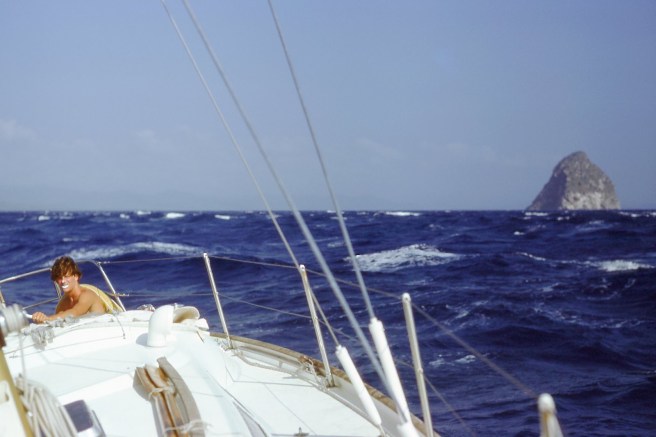
From Kingstown we sailed to Young Island, a palmy, sandy area, very pretty. We climbed a nearby island to look at the enormous cannons that had been lugged up, and another short cannon which could fire over Young Island to the narrows beyond (probably ½ mile away) or so the book tells us. I realize now that I failed to mention Diamond Rock off Martinique, where we stopped for a snorkel. A pinnacle of a rock sticking up, this barren outpost was manned by a group of British soldiers who had lugged cannon up a coupe hundred years ago. They apparently succeeded in disrupting coasting trade around Martinique until they were starved out after 17 months. The British apparently still salute the rock as a fellow ship in the Royal Navy and refer to it as the HMS Diamond Rock.
January 31
Mr and Mrs Arndt arrived Thursday morning. We’ve had a great week highlighted by steaks for dinner several times. Our week has taken us through the Grenadines, which are low (generally), sandy, but excellent snorkeling. There was a sizable yachting population on Bequia, but generally the islands support relatively small communities which make their living from the sea, fishing, shelling, and a few times a year, whaling.
February 10, 1977
Friday night in St George’s Harbor, Grenada, John Pete and I bolted a quick one and rowed in towards the blast of music on shore. It turned out to be a native dance, probably 200 natives and maybe 5 other whites besides us. We soon found ourselves dancing to the Carib music which really set you hopping. Local style is generally to dance by yourself, occasionally pairing off, and no one sits down. Everyone dances, non-stop. So from 10PM to 4 AM we all danced almost full time, except for awhile: met some local kids who showed us their dwelling, which was nearby. Their room was in a small corner of the building, lit by candles, a cracked mirror on the wall, small wooden chair and a bed in the corner.
Motoring back into St George’s Harbor we met another boat, two couples – kids our age (unmarried) from Denmark, whom I’d seen in Antigua. Their engine had failed and they could not tack up the very narrow dredged channel into the harbor, so asked for a tow in. We had just taken their bow line when “thud!” We were hard aground on a mud bank. After backing hard, with Pete and me out on the boom, we’d gone nowhere. We’d merely plowed ourselves further onto the bank. So I took the plow anchor and began to row out abreast of the boat. We planned to anchor, tie the anchor line to the spinnaker halyard and attempt to winch the boat off sideways. But rowing out, I began approaching the lowered bow of a huge Venezuelan amphibious naval craft. I made motions to the Spanish speaking crew members, who motioned I could come tie the anchor line up to their 500 or so foot craft. But by this time the chain on the anchor was mostly out, so it was a furious rowing battle in the flexing rubber craft, where one moment’s pause meant being dragged back from whence I came by the sagging chain. But the Venezuelan crew, lined up and down the huge bow, helped me out with the Spanish equivalent of “stroke, stroke, stroke” all in unison. I was laughing so hard that it wasn’t for another 5 minutes that I approached close enough to their bow to quickly throw a bow line before I slipped away. But shortly all was fast, and the Celestine was soon winched free.
We spent about 8 days in the harbor. We’ve spent days and days sanding, sanding some more, and varnishing. And, of course, partying. Another dance like the first one on Monday, Grenada’s Independence Day. Grenada is my favorite island so far, along with Saba. The people are pretty well off compared to most British islands we’ve seen, friendly, responsive. A good market here, too, limes a penny apiece, sweet potatoes (our latest favorite), grapefruit 6c US, etc. Bought 2 stocks of bananas today for $2.60 total. One day John and I took a ride in one of the busses, which are wooden, with wooden benches and brightly painted in fancy designs. We drove around a lush country, where breadfruit, soursop, cocoa nut, nutmeg, and other vegetables dotted the countryside. We saw a waterfall which is meant to be a big attraction, though is nothing too extraordinary.
Several boats pulled in from the Virgin Islands, so we’ve heard some stories of Jon Knowle’s antics. Have been socializing with a lot of boats. The native girl at the Grenada Yacht Club has been very friendly, serving us beers and keeping track of mail for us – when it comes. I’ve been reading Atlas Shrugged (1,084 pages) by Ayn Rand – fabulous reading but it tends to make me anti-social at times – a little too much of a no-nonsense hard-nosed philosophy, but generally good nonetheless. My interest in making a good-sized chunk of money someday has been reborn and intensified. Especially after reading Ayn Rand, and after seeing some of the fabulous yachts we’ve seen.
We invested in the latest Time magazine – I have high hopes that Carter could be a fabulous president. He seems to be rousing the American spirit. Guess I’m getting a bit conservative, though, and hope he keeps defense up. Yesterday met some Brazilian girls. One speaks 5 languages, lives in Rio de Janeiro, went to school in Italy, models in Italy, Brazil, and other places- generally gets around. Another free spirit – Donna – on a boat we’ve been seeing here and there. She from Canada, sailed to and from Europe last year, plans to make her way back to Canada for the summer, then come back down, on her own, sailing again. Today (Thursday) we left St George’s, sailed here to Halifax Harbor. We’re going to re-cruise some of the Grenadines, which we passed so quickly through with Mr and Mrs Arndt, before heading south to Trinidad.
Two more miles of sailing and we’ll hit 3,800 miles so far. Looks like the entire trip will be close to 8,000 miles. Forgot to mention we raced Sunday, placed 1st – of 2 boats. But at least that means a picture of the Celestine gets put up at the Grenada Yacht Club.
February 19
We’re now in Trinidad! We had a pleasant few days cruising the Grenadines, highlighted by one day in Tobago (fabulous) Cays where we caught, in one day, 11 fish, 9 lobsters, a crab, and (!) a moray eel. Seafood pig out. In St George’s we picked up two crew for the sail to Trinidad. Winky whom we met in Antigua, and Nancy a gorgeous blond Berkeley grad returning from sail bumming around the Mediterranean.
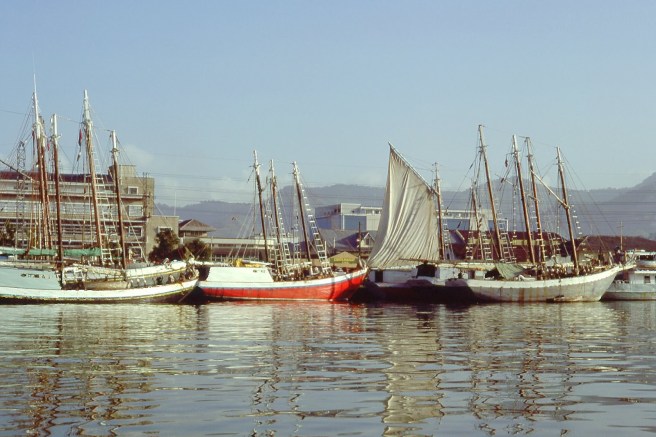
Port of Spain is an industrial dump. Dirty, polluted, noisy, and crowded. Carnival hasn’t even started and I feel like we’ve been partying for a month. Our first night here we went to the steel band semi finals after having bolted multiple daiquiris. We watched the bands awhile then went to the fringes of the coliseum. Socialized with many drunk Trinidadians, beating drunken drum rolls on tables, dancing in the alleyway. J, P, the 2 girls and I all wore our various hats, as if our white skins didn’t distinguish us enough. Trading hats with the natives, drinking shared rum, trading racial insults amid toasts of cheer.
We are rafted with quite a fleet: 6 Danish, 1 French, and 2 US boats. There are several other multi-national rafting parties in the harbor as well. We have a schedule; boats take turns watching out over the other boats as theft etc abound.
February 29
I forgot to describe a wonderful sight: sailing from Grenada to Trinidad we came upon a school of dolphins in the dark. We all huddled in the bow, watching the bright telltale phosphorescence sparkle as the dolphins shot and darted playing their elusive games. Free and exuberant they played around the boat for long bright moments.
Sunday night we went to a lively dance at the West Indian Club, and really danced hard and heavy as I’ve never come close to doing before. Met 2 Indian girls, Indra and Karlya, danced with them and their friends all night. Indra was a knockout. 4 AM with the dance over Pete and I found a parade of mongering whites and shuffled in that as the sun made its way into our presence. Quit 9 AM, and went back to the boat for a snooze. Monday we danced 12-4 AM at the Holiday Inn, really getting into the dancing.
I believe it was Tuesday that we went to watch the parades all afternoon. Everybody on the island turned out, dressed in the most beautiful costumes and head dresses. Watching everybody dancing unrestricted in the streets, joyous, happy, it was a beautiful scene. A black couple introduced themselves and Jeff (a sailing friend) and I danced with them in the parade. They later took us to his sister’s house where the family served us a rice dish, which I’m sure they had been planning to have for dinner. Unfortunately, though I mistakenly ate a pepper on which I gasped for awhile as my hosts laughed at the mistake and fed me water and cigarettes. The Trinidadians we’ve talked to are so happy and proud to be from Trinidad. They say they feel very free to act and do as they wish, people accept each other without feeling they have to conform in any way. They’re just out to have a good time. None of them wish to live in America, feel Americans feel restricted and too set on the pursuit of wealth. Trinidadians feel no bondage in their pursuit of beauty, freedom and happiness.
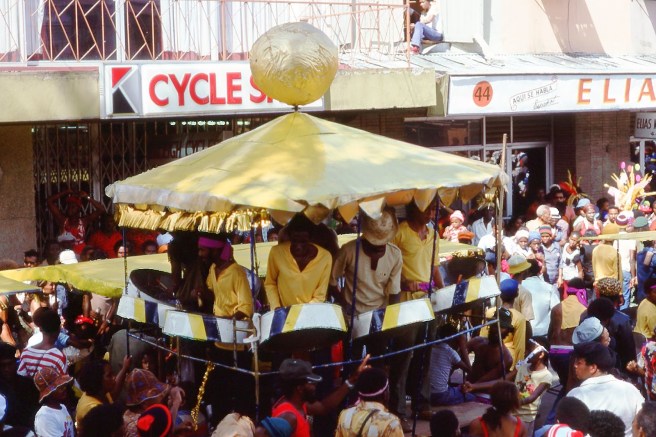
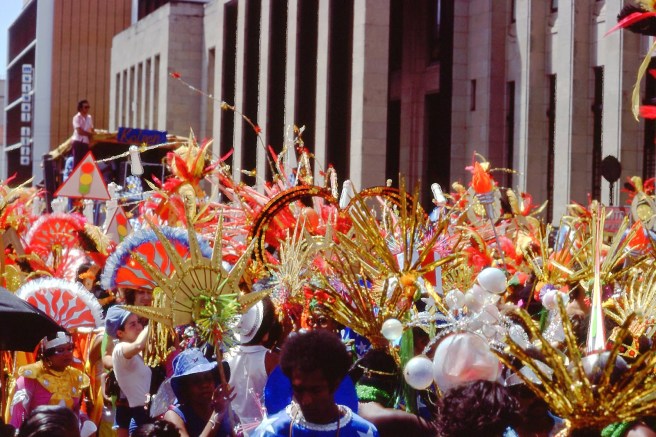
Tuesday night Jeff and I bought a bottle of rum, and drank about a third of it before we gave it all away to various natives. Trinidadians really take the festival very maturely – everybody is drinking alcohol but very few get out of control – we’ve heard of only two violent incidents. Generally, they all seem to be out for a good time without hassles.
We found some masks people had discarded in the street, so we all have masks and helmets, etc. to bring back.
Friday night a police boat came by, asked if somebody had swam out and climbed on the boat. Gasps revealed the presence of a native swimming between the two boats (all boats had left but ourselves and a French boat) so eventually the police, guns drawn, hauled him out. Apparently the guy had been under arrest, had fled and jumped in the water.
We’d just settled down from that incident when a Coast Guard boat came by and told us to put on an anchor light. He told the French boat he may prosecute them for having no running lights. We had to interpret between the Coast Guard and the French, and as we did Corporal Roach warned us that just because he couldn’t understand French we’d better not be cursing in French! To divert the subject Blake (temporarily staying with us) brought up our police story. Corporal Roach said “May I have a picture of you – you see, I am also a sub-editor of the maritime paper.” So he took details of our story, said he’d beef it up a bit, describe us as heroes, and publish it. But on leaving he said “Just because of this doesn’t mean I won’t prosecute because of the running lights.”
We are leaving Tuesday morning hopefully to sail to Isla Margarita off Venezuela. We had to go through a big hassle Thursday and Friday getting pictures taken and recommendation forms from the US consulate to get visas for Venezuela. Hopefully will get them back tomorrow.
February 29
Corporal Roach came by all the boats today, giving out court injunctions to everyone – but us! For us he brought some copies of the newspaper of which he is sub-editor! So, every boat in the harbor must go to court tomorrow. Fines are rumored to be $300 but who knows. Looks like that fool swimming out to our boat might have saved us a lot of dollars. The Corporal must like us.
Blake left today. I had a bull session with him last night. Starting with Ayn Rand’s theories to self esteem, capitalism, the most satisfying way to live, girlfriends, travel plans and so on. I was quite sad to see him go today, off to fly to Venezuela. Then overland to Peru, Central America, maybe he’ll get on a boat to the South Pacific. He has $6,000 at home at his disposal, and plans to travel until it runs out. We had some good dinner talks on the pyramids, the great rock arrows in Peru, Atlantis, and other historic curiosities. Fascinating person. He’s 27, lived around but unmarried, artist, is part way filming a movie, etc. Really easygoing, knowledgeable. Just looking to have a good time in an interesting way. He should have a ball discovering tribes and wilds in South America. I hope to bring him cruising in Maine some day.
March 8
Last night, in Guanta Harbor, Venezuela was the most fabulous night of the trip: we spent the night drinking and talking with some Russian seamen. We were tied up to the dock, Pete and I playing cards while John and Winky (who speaks Spanish) went to clear us out of Venezuela. The engineer from a huge Russian cargo vessel tied up in front of us came by. He spoke very good English, so we had him aboard and talked a couple of hours on all kinds of subjects. Anatolia 29 years old, from Leningrad. We questioned him about dissidents, about socialism, freedom, and all kinds of political questions. He claimed that Solzhenitsyn had helped Hitler against Russia in WWII and that he was generally unpopular in Russia. We showed him a Time magazine describing the arrests of several Soviet dissidents. He claimed they were terrorists so had deserved to be arrested. What had they done? Printed material against the government, he said. We were surprised about some details of the US he knew: he said he was glad Russia had no such thing as a Ku Klux Klan, said they didn’t have all kinds of problems with labor unions the way we have trouble with George Meany. He seems to think blacks and whites in America were really opposed to each other and couldn’t believe that we had some black friends and that I had roomed with one in school. But he did say he favored détente, and that while he was used to and content with socialism, he understood how we were used to and content with capitalism. He was a bit amazed when we told him how much the boat we were on was worth, and how much our parents make each year. But he did say he thought the socialist system was very good since it helped everyone so they could all share equally.

Then Pete and I went on a tour with him through the Russian ship, with 9 huge cylinders, enormous oil pumps, etc. We saw the captain’s wheelhouse with its radar and gyrocompass and other equipment. Then we went to a smoking room with a ping pong table. There we found pictures on the wall of the Soviet Congress, Brezhnev, Lenin, pictures of Lenin’s statue, Marx, their party leaders, etc. There was also a big plaque picturing a youngish Russian boy with a code of rules of socialism – he read some of them to us – about 15 rules or principles in all – among them “Be kind and generous to all countrymen,” “Good will to all,” “Be loyal to the Party,” and so on. Anatolia and an older fellow who was there were obviously very enthusiastic and reverent about the rules. They brought us to a table on the side of the room, and let us help ourselves to maps of the USSR and booklets printed in English (Spanish and French as well) entitled “The American Tradition- What Remains?” “USSR – People’s Well Being,” and others. So we’re thumbing through these today.
But the best was yet to come – with John and Winky now, we went to Anatolia’s cabin and he and 3 other crew members (who didn’t speak English, or very little) began breaking out bottles of Russian vodka and Russian wine, and we began drinking toasts. Six hours and literally about 12 bottles later we had toasted with the Russians to Brezhnev, to Carter, to world peace, to détente, to socialism, to capitalism, to friendship. Unfortunately (maybe not) the Russian technique for drinking is to drink straight vodka, straight rum (they didn’t like the daiquiri mix mixed in) and, when toasting, to drink it all in one sip. So we all got pretty loaded. They (Anatolia, Vladimir, and two others) gave us some banners, some Russian (actually Bulgarian) cigarettes, etc. So we each gave them various American T-shirts. We kept pressing them to give us some addresses so we could have Russian pen pals – they always refused; maybe they were afraid of the KGB. They were somewhat ambiguous when we asked them about prison camp – they said Solzhenitsyn had lied, but that prison camps did exist, but he wasn’t afraid of being sent there because he was a good citizen. He said Russians are free to leave the country to go visiting if they wanted (are they?), that American magazines are full of propaganda. But he did say The NY Times is available for them to buy.
Generally, it sounded like the Russians are so used to socialism, and ignorant enough of capitalism, that they are content and just want to be able to have a reasonable home and a good wife. On the one hand he said he did want socialism to spread around the world, but on the other said we should live as friends (us and them) each in his own system. He did say war was foolish, that so many Russians were killed in WWII and what good did it do, etc.
Drinking with them though we mostly just fooled around, talked about what our various seafaring lives were like, about the shortage of women which was our common problem (they were very interested in Winky, gave her the most booze, the best chair, etc). Anatolia played the accordion for us, excellent Russian music. He showed us his Russian fur cap and his winter long overcoat. Those guys are really neat, they are really just like us in wanting a good time. They were super friendly, gave us a pile of Russian candy, let us use their sauna and shower, and so on. We finally left around midnight, inviting them to breakfast at 7 AM. Whether they came or not we’re not really sure – we woke up at 7:30 and had to leave right away – we had been supposed to leave the night before but had to get away before 8 AM when the customs officers came to work. Anatolia has our addresses, so possibly we’ll get letters from him, though I have doubts. In general, though this was one of the most fascinating nights of my life.
After Trinidad, to go back a bit, we sailed overnight to Margarita. Spent a day wandering around the towns, swimming on a windwardside beach, and generally taking in the Spanish architecture and culture. Then a day’s sail to Cumana, one of Venezuela’s oldest cities. We went to an ancient Spanish fort, rustic and awing, which inspired me to try and go see interior South America some day – the Inca empires, etc. Spanish culture is colorful, the girls quite good looking, very nice churches and parks. Venezuela is generally quite wealthy anyway – mostly rich ish houses, American cars abound, and they have good roads. There are a lot of guards, however, around dock areas, company entrances, banks, etc – all with guns, some, to our surprise, with machine guns. The next day we made a lunch stop in a beautiful fjord type of cove (high mountains around several hidden tucked away coves) before going to a bay just north of Puerto La Cruz. Here there are oil tankers going to and fro everywhere, an oil refinery, dozens of oil tanks, and Venezuela’s typically sandy and very dry landscape.
We met a Venezuelan family on another boat, who had a car ashore and took us in to see the town, try some Spanish (strong but delicious) coffee, and so on. Puerto La Cruz is just 4 years old, very modern, rich for the most part. Sunday, we went to the supermarket and met a guy who runs the American school system for one oil town with his student teacher girlfriend from Michigan. They treated us to mid-afternoon drinks and sandwiches at a fancy hotel by the side of the pool. We talked of Venezuela, which is rapidly growing, and needs engineers, etc. He said he had a friend who makes a fortune importing watches, pocket calculators, and the like into Venezuela.
That night we had dinner at our Venezuelan yachting friends. Two nice daughters our age, they Christian Scientists. Mr ? showed us a booklet he created which is a table for celestial navigation with only one addition required to solve the spherical triangle, which looked like it really simplified celestial navigating. He is a computer specialist mathematician which helps. He is now trying to market the tables.
Monday we got into town bright and early, took a taxi 60 miles inland to an oil town (round trip: $4 each). The Venezuelan countryside we saw is flat, dry, brown, with oil pipelines running everywhere, and refineries spaced here and there. Ayn Rand would love the countryside. But we did see the mountains in the distance, which are meant to be snow-peaked, large, fairly lush at their bases. The town was fairly Americanized, as is much of Venezuela, with hamburgers chain stores, etc. At least in the older towns the traditional Spanish culture dominates.
We heard we had been sailing illegally, for after clearing at Margarita we were also supposed to clear along the mainland. So, Tuesday afternoon we quietly slipped around to Guanta and told customs there we had just arrived from Margarita and had cleared out of Margarita though they hadn’t given us any papers (we actually never had cleared out). In any case it worked, we cleared out, spent last night with the Russians, and today sailed here to Isla Tortuga, 60 miles off the coast. Have been too tired and maybe a little hung over to explore any of the island yet, though, which is low and sandy.
The last few days have inspired me to study Spanish, and Russian, and to come down and backpack through South America in a couple of years, and to go to work for the Defense Department if possible. Will have to wait to see if such enthusiasms will persist though. I have loved Venezuela, the Spanish culture (what we’ve seen) and of course our night with the Russians.
March 14
Our sail from Tortuga has its moments. First, we spent a glorious day on a deserted island off Tortuga, a wide, low sandy spit with water from the ocean flowing through to form ponds, covering wide areas of sand with a foot of water, to run and pant and splash through. We used nearly a whole roll of film taking pictures of each other running, dancing, diving, leaping … really joyous, expressions of freedom. Beauty of movement.
But the sail: we left in the evening, with a rising wind and crashing seas – broad reaching, a real sleigh ride towards Islas des Roques, all the stars twinkling through the spray and the salt. Round about 11 PM I was having quite a good talk with John about philosophy and love and politics and life, when a bright, streaming sparkle caught my eye, descending from the sky to windward: a flare. At once we were in a moral dilemma: there the unflagging rule that you always seek to help a boat in distress, without question. And yet, the stories, from more than one source, that pirates, especially along South America, shoot flares to lure victims their way- pirates who shoot to kill, looking for boats to smuggle goods with, then sink. There was actually never any doubt in our minds that we weren’t going to go towards the flares: anywhere else, America, Eastern Caribbean, Bahamas, we would go to help; but not here, from where published stories originate. Nonetheless we were dismayed at the situation, tried calling any ships or coast guard in the area by radio. But we were not going to take the chance of walking into a possible trap, especially not without guns, at least, as defense. Regretfully we kept sailing.
It wasn’t long before we came to our senses and realized that if it were a pirate vessel of some sort, that they may well have picked us up on radar (we were running without running lights) and may indeed have been tracking us all along. So we took down our radar reflector, and praised our good speed, 7+ knots.
Stories and articles may be eye-opening, but you never really believe that things really go on as such. Seeing a flare and knowing the possibility that that could well be a group of men with the purpose that stormy night of killing us and taking the boat, is a startling bit of reality. I could not believe we’d really seen a flare. In my heart I sincerely believe that there was no boat in distress (in 20 years of sailing I’ve never seen a flare; strange I should see my first off the coast of Venezuela) and that we may have been in more danger than we were caring to think about.
Lying in our bunks awhile later, John and I discussed (nothing like being paranoid!) our defense strategy in the event of piracy. Our #1 defense would be to make Molotov cocktails by pouring gasoline for the outboard engine into bottles, sealing the bottle, trying kerosene-soaked rags around them, light and throw – and pray. We also discussed firing flares of our own right at them, fire extinguishers in their faces, spear guns, machête, sledgehammers. We decided it would be better to fight than to roll over and wait to be thrown overboard. Unfortunately, though our defenses against guns were minimal to say the least.
No pirate boats came, anyway, and we spent three days in Los Roques. Exploring a sand-swept fishing village, houses built of driftwood, logs and other “find around,” swimming, and running down miles of white sand. Scuba diving, where we saw some beautiful new (to us) kinds of fish, speared four enormous lobsters for dinner. Saturday night (2 days ago) we sadly left for Puerto Rico.
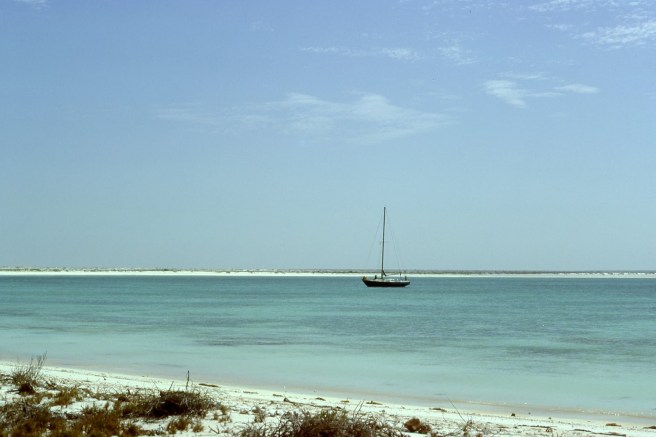
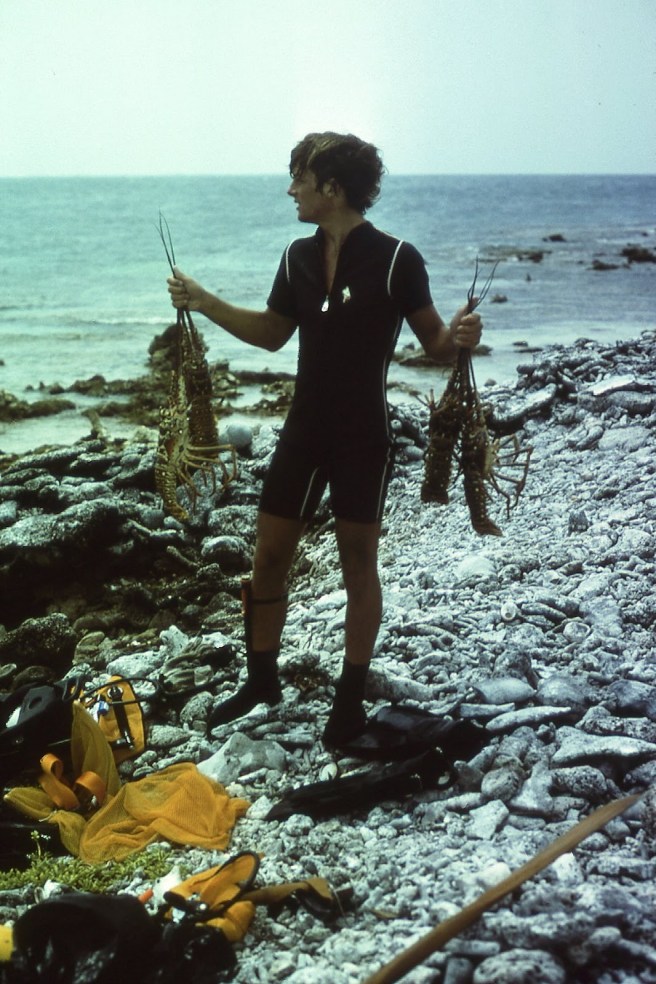
Two hours out, beating into 15-20 knot winds, our mainsail ripped along a seam. But we are now back at close to hull speed with the working job rigged, effectively and with good shape, in place of the main: tack at the windward forward lower shroud, clew at the regular outhaul block. It really works well.
We’ve had two beautiful days of sunny reaching, reading, and relaxing. Yesterday a school of dolphins came by with their sleek, efficient, effective purposeful bodies, streaming, darting, sliding through the water freely, exuberantly, as only they can do.
Today we all went for a mid-ocean dip in the clearest, bluest water I’ve ever seen. Dive in, bright white bubbles floating up; look down in dizzying blue depths to infinity, see the red keel of the boat bob gently, your own yellow-brown body like a blush of effervescence against the blue, hanging over the hue. So refreshing!
I’ve just finished The Ascent of Man. Coupled with Ayn Rand that really makes you admire the leaders, the innovators of our past, their devotion to truth, their quest for knowledge, their battle against dogma (religious and political). The grandeur, fantastic development of man’s knowledge in science and art. The value of integrity, people helping themselves, freedom of thought and expression. The unity of science and art. The history of man – remarkable, especially in science in the last few centuries.
April 7
Have been reading Carlos Castaneda’s Don Juan series and had a little interesting talk with John clarifying some of my ideas – now I might as well try and describe them if I can. I don’t like people who are fanatical, about anything; or at least I don’t care for it when people are fanatical. I rarely get involved in deep discussions or arguments, and when I do, I usually finish feeling a bit chagrined. Really, I don’t feel really strongly at heart about anything, and I don’t think people generally do. I think that people when argue and carry themselves so surely about a subject, arguing vehemently, really don’t care that strongly about it, but really, they have doubts within themselves about that subject, and the stronger they pretend to argue the easier they feel they can overcome these doubts. I prefer to work with “bents of nature” or inclinations. I would rather not see a nuclear war, and I would work to prevent one, but at the prospect of one taking place I would say “Oh well.” I do not mean this in a pessimistic sense, only in a realistic sense. I have my life to live, and I prefer to make it worthwhile, I have a bent towards doing good and being right and making a lot of money, and I will try very hard to achieve these goals. But beyond it all I know that really, my life, no one’s life, really matters. My acts, and the acts of my fellow men, aren’t really important. I listened to one girl fanatically screeching that Idi Amin should be shot and strung up, the CIA should go blast him blah blah blah She was, or seemed, almost hysterical talking about Idi Amin. I would prefer to see Idi Amin shot, and I would work towards that goal, yet in the end I really don’t care. I know it really doesn’t matter and I’m not going to lose sleep over it.
“I choose to live, and to laugh, not because it matters, but because that choice is the bent of my nature.” “A man of knowledge chooses a path with heart and follows it, and then he looks and rejoices and laughs; and then he sees and knows. He knows that his life we be over altogether too soon; he knows that he, as well as everybody else, is not going anywhere … a man of knowledge has … only life to be lived, and … his only tie to his fellow men is his his controlled folly. Nothing being more important than anything else, a man of knowledge chooses any act, and acts it out as if it matters to him. His controlled folly makes him say that what he does matters and makes him act as if it did, and yet he knows that it doesn’t, so that when he fulfills his acts he retreats in peace, and whether his acts weee good or bad, or worked or didn’t, is in no way part of his concern.”
It is my inclination to be successful in a “civilized” sense; so I worked, went to Yale, sailed to the Caribbean, etc. But it really doesn’t matter. I will try very hard to have a good family, make a lot of money, sail to exotic lands, because the bent of my nature is to do what I want, get a lot out of what I do. I will try to remain thin, but if I get a pot I’ll laugh and say, “what do you know.” I have nothing to prove to anybody – only life to be lived, to be taken a little bit with a grain of salt – my bent is to be strong and upright and successful, but wherever I may end up, it really doesn’t matter. There’s no need to be up in arms about anything, only to sit back and let your life unfold before you with humor and humility and a willingness to accept your fate. To choose your paths and follow them with dedication and with heart, but to remember that nothing is really important in the end.
Sometimes I feel I’d like to sit back and laugh at the world, all those crazy people running around with their worries and schemes and paranoias, their problems and pressures and neuroses. So crazy! People take themselves too seriously, feel they’re too important. In order to say these things, however, I have to be strong myself – I believe in dealing from power; I could not justify being a bum sitting back saying these things. But I’m not a bum.
May 4
Now 1 AM, we have just left the wonderful and hospitable Robertson family, and Wrightsville Beach, North Carolina, for our final leg home. We’re sailing outside nonstop to Connecticut (570 miles). The past 6 weeks have mostly been spent in the beautiful Bahamas, probably my favorite area I’ve ever seen. We spent a few days running around Ponca, Puerto Rico, before making a relaxed sail along the Hispaniola coast, then North to the Caicos Islands – an easy, sunny, 3-day, 300-mile passage, sunning during the day, stopping now and then for a mid-ocean dip. An hour chasing whales around, huge tails flapping sparkling water. A day spearing grouper and lobster, then off again, 240 miles to Great Exuma. Another pleasant, simple passage, playing “Oh Hell” over fish chowder in the cockpit, wandering, wondering through midnight moonlit watches.
A beautiful week with my sister Judy, and Liz and Cindy, collecting conch for lunch and searing grouper for dinner, snuggled alone in sandy light-blue bays, the world is ours. Diving through tunnels under caves at Staniel Cay, drinking and dancing in the tiny native bar. Relaxing immodestly under the sun, spinnaker running over sand bottom to wherever we wanted to go. Dining and swinging in Nassau, quarters (50) crinkle out a one-armed bandit (and back in again!), a slow dance with Judy, flying high with champagne in the middle of a Nassau shopping day.
Then trouble: a simple, 60-mile overnight sail turns into a crashing, violent thrash up the windward side of Abaco, aborted attempts to get through breaking cuts; two miles from our destination we are defeated, forced to sail 70 miles and 15 hours back south to a safe lee at Sandy Point. Five days varnishing, waiting for the weather, two friendly natives joining us each night for dinner and mellowing out under the influence of native Abaco delights.
70 miles back to Parrot Cay, a self sufficient true paradise island, whalers and windsurfers and sunfish and scuba diving at our disposal. The generous Gale family living on an island of their own, complete independence and self sufficiency, sharing it all.
Then a fabulous 500-mile passage to North Carolina, beating gently into northerly winds, or broad reaching at 8 knots through the Gulf Stream (10 knots over bottom). Confusion with celestial and RDF but we finally find our way to Frying Pan light and reach in to a warm welcome back at the Robertsons, 6 months and 12 hours from the day we last saw the US.
Two days eating cereal and steak and hamburgers, long-forgotten treats. Daysailing and skateboarding and falling in love with the daughters (10 and 12 years old), Tammy and Kris.
And here we are, off to sea again.
Making long (300, 400, 500) mile passages has come to seem like going on a day sail – throw a little rice on board, buy a chart or two and hoist sails for wherever you want to go. There is nothing to be feared, only the beauty and peace of the wide sea to look forward to, meditating alone at the wheel on a solid boat in an expansive gentle ocean. There is nothing in the world to compare to sailing offshore where time and space and eternity are yours, and you live for yourself: free, self sufficient, relaxed, fulfilled. Nothing compares to thrashing against rhythmic swells, or tearing across waves on a surging reach, or drifting across a moon-sparkled millpond with nothing to live for but the moment at hand, which is everything, and nothing to look forward to but climbing into a warm blanket when the trick’s through.
May 5
All right US Navy! Sailing 80 miles off Cape Hatteras this afternoon we sailed right into the middle of naval air practice. Twice we passed within 2 miles of an aircraft carrier, with jets – up to 20+ in the sky at once – buzzing like bees all around, landing, taking off, practicing air moves on each other. It was truly an impressive, incredible display – jets four at a time banking sideways, diving down vertically, then whipping back up above the clouds, all around and overhead. Four of them at a time would bank in circles around each other, passing right next to each other in opposite directions, really hauling. The performance really made me feel proud of the US and the Navy, as we got an idea of the awesome power the US has. A heartening feeling.
Twice a Navy helicopter came to circle around us, checking us out, but they did not radio anything over on VHF. It was impressive to see what a short distance the jets need to land (caught with slings) and take off. They really can maneuver, really can haul, really must be potent weapons. Wish we’d had a 50-foot US flag to fly on the masthead for them! We were really getting psyched up watching.
I just reread this entire journal. One thing I just realized about myself – I don’t like dogma, political or religious, especially religious. I’ll try anything because I want to experience anything and everything. By holding to dogmas people limit their experiences so much; religious beliefs often limit how many experiences? Partying, sex, running naked on a beach; too-strong beliefs in humbleness and goodness and humility prevent people from striving to experience, to do their best, to live their best, to feel. Do everything, try everything, be free, don’t allow dogmas and beliefs and morals tie you down from something that might be new.
I will never love anything as well as setting to sea with time and space for myself. The moon, the sea, the sky, the water – waiting to be felt, to be experienced, to be lived.
May 11
We arrived at Ambrose 9 AM Saturday, went to the City Island anchorage for the night, and arrived at Southport 7:30 AM Sunday morning. We averaged just over 6 knots for our 4-day, 600-mile passage north. We had many sail changes and one wild time when we were slow taking the spinnaker in from a deceptively-fast approaching twilight squall. But we’re home now and that was all years ago. Or so it seems. Our trip is over and life does not exactly look too exciting. I’m not too thrilled about going back to school, and don’t know what I’m going to do or want. I want to build a 21-footer and sail on the special TransAtlantic race for small boats. Is that possible on a $200 budget?
My greatest fear in life is to become a “typical” citizen. When my time comes to die, I don’t want to be known as the nice guy down the street, or the semi-successful executive or ocean racer. I want to be something special for myself. “Woe be to him who seeks to please rather than to appall.” (Moby Dick) I am respectable and quiet on the outside, but wild and a dreamer on the inside. A quiet careful conservative life I do not relish. Not now at least. I wish life were always screaming on a tight reach, or a wild party, or feeling deeply on a calm meditating night. I feel too restricted, too often, to do as I want, act as I want, speak as I want. I often feel hemmed into set patterns by parents and families and friends. need a boat of my own to set my dreams.
I wish I could be content with less. But I want a life full of fulfilled dreams.


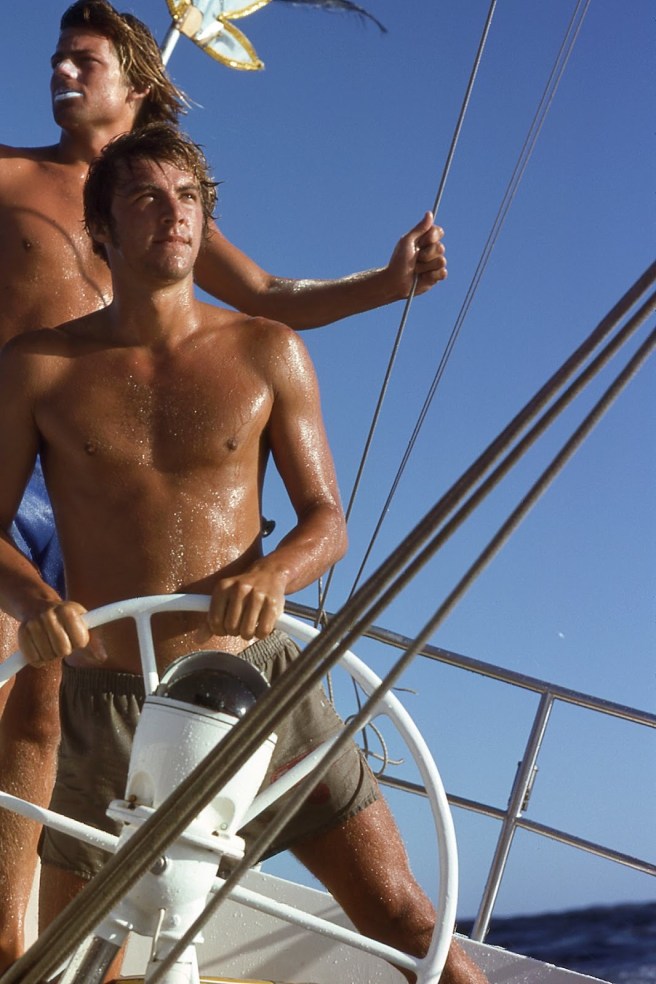
 Sailing Stories - Max Fletcher